
Belgard General Contractor in Vallejo: A Homeowner’s Guide
Belgard backs its pavers and wall blocks with a limited lifetime product warranty, but that warranty covers the block itself – not the base, the drainage layer, or the jointing sand. Everything that decides whether your patio is still level five years from now belongs to your contractor. Belgard’s own dealer support will confirm that line if you call them. This guide separates what Belgard covers from what your contractor owes you, so you can hold both to account in writing before anyone breaks ground in Vallejo.
What does Belgard’s warranty actually cover, and what does it leave to your contractor?
Belgard’s limited lifetime warranty is a materials warranty. It protects against manufacturing defects in the paver or wall block – a block that cracks, spalls, or fails to hold its structural integrity under normal use. What it does not cover is the layer beneath it. Base preparation, compaction, drainage, edge restraint, and joint sand all fall outside the product warranty, and Belgard is direct about that when you ask.
That leaves you with two separate documents to secure before work starts:
- The Belgard product warranty – manufacturer coverage on the pavers and blocks. You should receive the written terms and know the model line being installed, because coverage varies by product family.
- The contractor’s workmanship warranty – written coverage on the base depth, compaction method, drainage slope, edge restraint, and joint sand. This is the warranty that actually protects a patio from settling, heaving, and joint creep.
A written price before work begins should spell out both. If a bid quotes Belgard product by name but is silent on who guarantees the installation, that silence is the risk. In our experience, the warranty conversation happens before the contract – not after. Everything gets documented, signed, and handed to the homeowner.
Why Vallejo clay changes the base spec – and where bids quietly cut corners
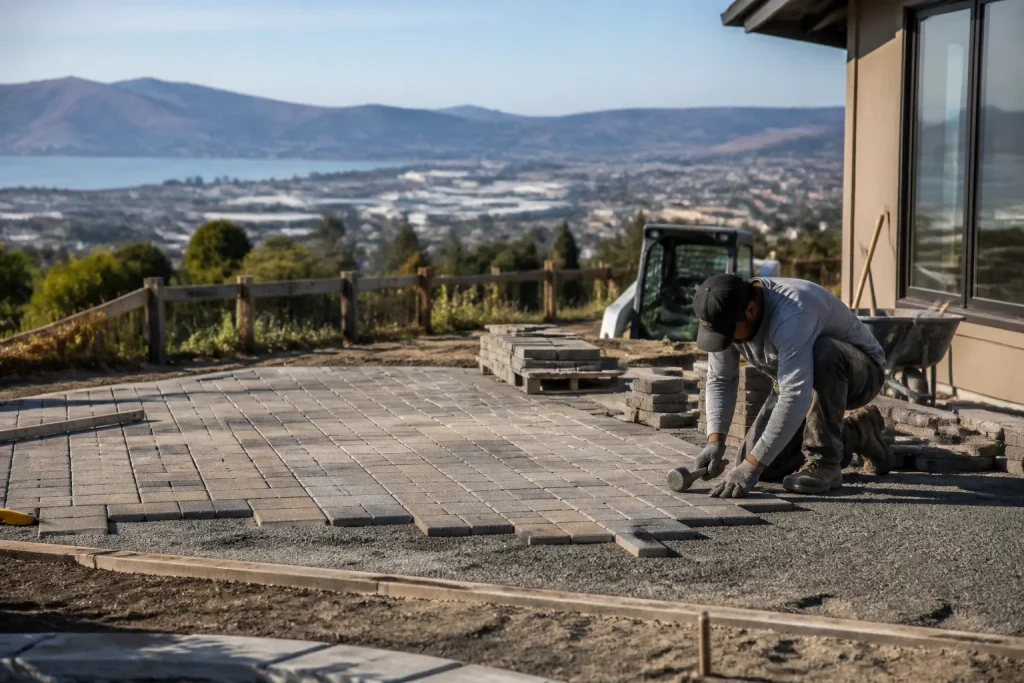
Much of Vallejo sits on expansive clay soils. Expansive clay swells when it takes on water and shrinks as it dries, and that seasonal movement is the single biggest threat to a Belgard patio or retaining wall. The base is what absorbs that movement. When base depth or compaction is underbid, you don’t see the failure in month one – you see it in year three, when joints open and corners lift.
What a proper Belgard hardscape base looks like on Vallejo clay:
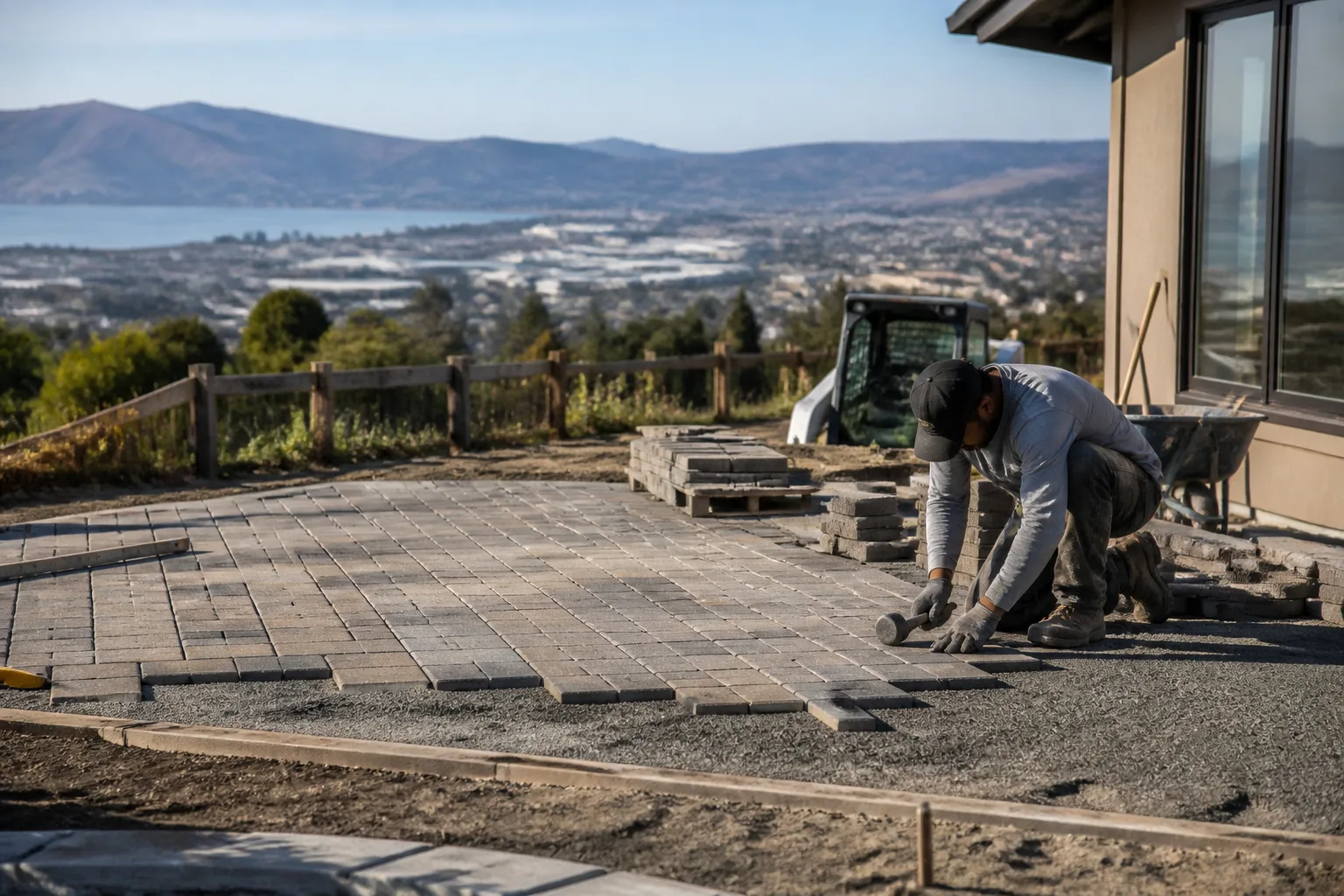
- Adequate excavation depth. Manufacturer specs call for a compacted aggregate base beneath the pavers. On expansive soil, that base needs to be deep enough to isolate the pavers from ground movement. A bid that skimps on excavation depth is the most common place a price gets shaved.
- Compaction in lifts. Base goes down in layers and gets mechanically compacted, not dumped and leveled once. Ask how many lifts and what equipment.
- Drainage and slope. Water needs a path away from the house and off the hardscape. Pooling at the edge of a patio is a drainage failure, and it accelerates clay movement underneath.
- Edge restraint. Without a properly pinned edge, pavers creep outward over time – “edge creep” – and joints widen.
None of this is exotic. It’s standard hardscape work, and it’s the first thing cut when a contractor needs to hit a low number. If you’re also planning interior work at the same time, our General Contractor in Vallejo page covers how we sequence exterior and interior scopes so one crew doesn’t undo the other.
How do you read a Belgard contractor’s portfolio for base failure signs?

Photos of a finished patio tell you almost nothing. What tells you everything is a project three or four years old. When you’re reviewing a Belgard contractor’s portfolio, ask to see older work and look for these specific signals:
- Uneven joints. Joint widths that wander – some tight, some wide – suggest the pavers have shifted on the base.
- Edge creep. The outer course of pavers pushing past the edge restraint, or restraint that’s leaning. That’s a base and edge failure, not a cosmetic one.
- Pooling water. Water standing near the hardscape edge or against the foundation after a rain. Vallejo gets enough winter rain to expose a bad slope fast.
- Lipped pavers. One paver sitting noticeably higher than its neighbor – a sign of differential settlement underneath.
- Sand loss. Joint sand washing out repeatedly points to drainage moving through the wrong places.
Ask the contractor for addresses or at least dated photos of Belgard installs that are several seasons old. A crew that does base work properly is proud to show it. A crew that doesn’t will steer you back to fresh photos. We’ve walked more than one Vallejo homeowner through a failing patio where the pavers themselves were perfectly fine – the block held up exactly as Belgard promised; the base underneath had been underbuilt.
What does “Belgard Authorized Contractor” mean, and how do you verify it?
Belgard sells through a dealer-contractor network, and an “Authorized Contractor” designation means the contractor has been accepted into that network through a Belgard dealer – it’s a relationship with the dealer, not a badge Belgard hands out independently. The designation signals access to product, training, and dealer support, but it doesn’t replace your own due diligence on the installation warranty.
Because that designation is granted through the dealer, the dealer is also the fastest way to verify it. To confirm a contractor’s current status for a Vallejo project:
- Ask the contractor which Belgard dealer supplies their product, then call that dealer and ask whether the contractor is currently in good standing.
- Ask Belgard’s regional dealer support directly whether the contractor is listed as authorized in your area – status can lapse, and a badge on a website doesn’t prove current standing.
- Get the specific Belgard product line in writing. Different lines carry different warranty terms, and the right line for a Vallejo clay site may not be the cheapest one.
Verification is a five-minute phone call. Do it before you sign, not after. And while you’re checking credentials, ask what the contractor installs for the rest of the exterior – a hardscape crew that also hangs a proper Therma-Tru entry door and Barrette or Master Halco fencing is a crew that thinks about the whole property, not just the patio.
How should you structure payments on a Belgard hardscape project?
The only real test of base installation is time. A patio can look perfect at handover and still fail in its first wet season if the base was underbuilt. That’s why the payment schedule should be built around a settlement inspection, not around the day the last paver goes down.
A schedule that protects the homeowner looks roughly like this:
- A modest deposit to schedule and order materials.
- Progress payments tied to documented milestones – excavation and base complete, then pavers set, then edge restraint and joint sand finished. Each tied to an inspection, not a calendar date.
- A meaningful final payment withheld until a 90-day settlement inspection confirms the base has held. That inspection is where you look for joint movement, lipping, edge creep, and drainage problems after the patio has been through weather.
A contractor who runs on the Garrison Standard will put that schedule in the written price before work starts, with no change orders at the door. The 365-Day Done Right Promise exists for exactly this reason: if the work fails inside the guarantee period, the contractor comes back and corrects it at no charge. A schedule that holds back final payment until a settlement inspection isn’t distrust – it’s what proper base work should welcome.
When to call a pro
If your Belgard patio is already showing lipping, edge creep, or pooling water, don’t try to re-level pavers yourself. Lifting pavers to reset a base means re-establishing compaction, slope, and edge restraint – and the failure underneath is usually deeper than what’s visible. A trained crew can diagnose whether it’s a base, drainage, or edge problem before more block is compromised.
If you’re installing new, the base work is where the value is. Our team has technicians with up to 22 years of experience, and we install Belgard hardscape alongside Kitchen Remodeling in Vallejo and Bathroom Remodeling in Vallejo projects where the exterior and interior scopes run together. For a broader look at how we run a project start to close, start at the Bradford Remodeling Co Vallejo home page.
The Bottom Line
Belgard’s product warranty protects the block; your contractor’s workmanship warranty protects the base, drainage, and jointing. On Vallejo’s expansive clay, the base is where patios succeed or fail – so demand a written base spec, verify the contractor’s current Belgard dealer standing, and hold final payment back until a 90-day settlement inspection. If you’re in Vallejo and need help, Bradford Remodeling Co Vallejo offers free estimates – call (844) 560-4789. You’ll get a written price before work starts, and every completed project carries the 365-Day Done Right Promise.
Frequently Asked Questions
No. Belgard’s limited lifetime warranty covers manufacturing defects in the pavers and blocks, not settlement caused by base preparation, compaction, or drainage. A settling patio is a workmanship issue and needs to be addressed through the contractor’s own warranty, which is why you want it documented separately in writing before work starts.
Base depth depends on the product and the site, and on Vallejo’s expansive clay, it needs to be deep enough to isolate the pavers from seasonal ground movement. Rather than quote one number, ask your contractor for the written spec: excavation depth, number of compacted lifts, compaction method, and drainage slope. If a bid is vague on base depth, that’s the corner being cut.
Ask which Belgard dealer supplies the contractor, then call that dealer and confirm the contractor is currently in good standing. The dealer is the fastest verification path because the authorized designation comes through the dealer network. Get the exact Belgard product line being installed in writing, since warranty terms vary by line.
Final payment should be withheld until a 90-day settlement inspection confirms the base has held through weather. That inspection is the only real test of proper base installation – you’re checking joints, edge restraint, lipping, and drainage after the patio has been through a wet season, not the day it was finished.
Written by the team at Bradford Remodeling Co Vallejo.
Need Construction Help?
Call Bradford Remodeling Co Vallejo - licensed & insured, here with fast after-hours help in Vallejo.
(844) 560-4789