
Home Remodeling: Repair or Replace? How Vallejo Homeowners Decide
Repair bids almost always come in lower than replacement bids, and they almost always grow. That gap isn’t a pricing trick. A repair is a guess about a problem nobody can fully see yet, while a replacement is a scope you can write down and hold a contractor to. If you’d rather have a real number before a single tool comes out, call us at (844) 560-4789 and we’ll talk through which option fits your house.
Why Repair Bids Start Low and Finish High in Vallejo
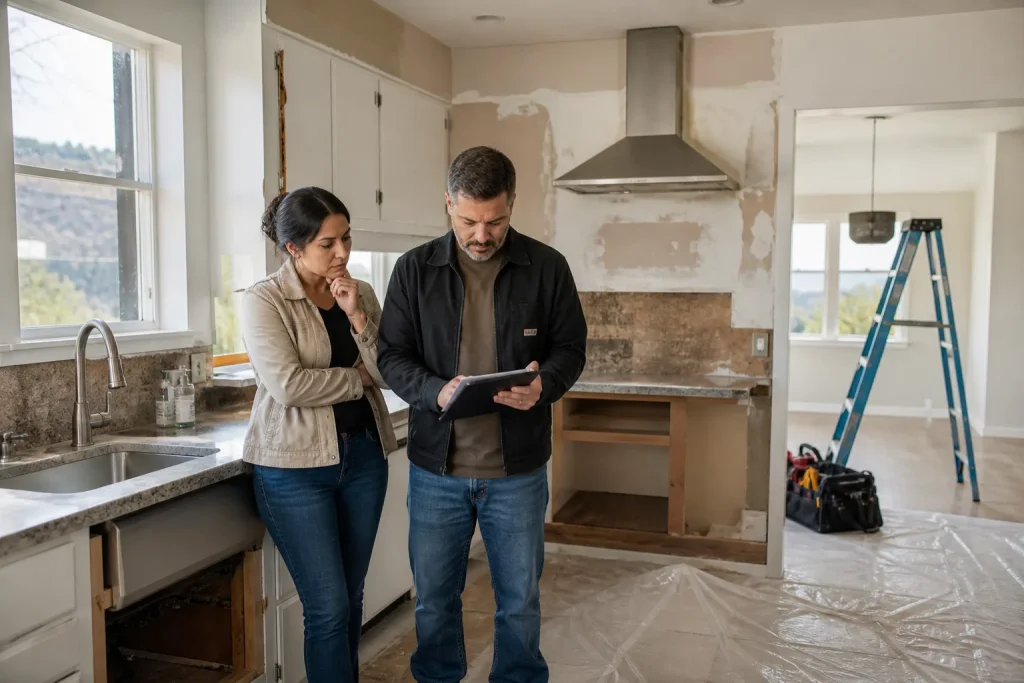
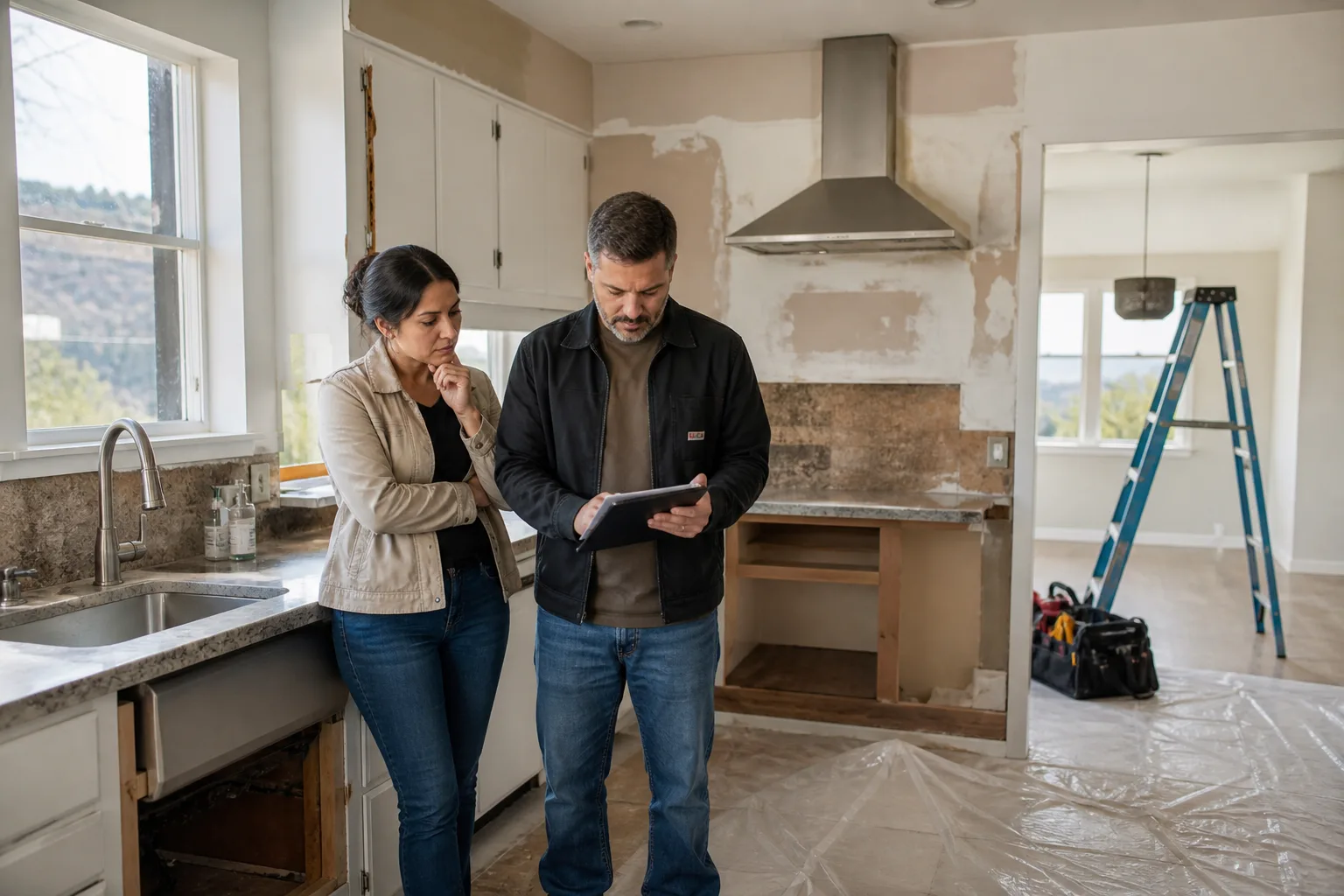
The hidden-condition problem is the single biggest reason repair projects blow past their budget. When you open a wall to fix a failing shower valve, you expose the framing behind it. In Vallejo’s older housing stock, that framing is often soft from decades of slow leaks, and the subfloor under the tile may be rotted through. None of that shows up on the original bid because nobody saw it until the wall came down.
We’ve seen this pattern repeat across hundreds of homes. A repair estimate covers the failure you can see. It almost never covers the adjacent damage the failure caused, and in a city where a lot of housing predates modern waterproofing standards, that adjacent damage is common.
How to price for that risk upfront:
- Ask the contractor for a contingency range, not a single number. A good repair bid should state something like “this could run $2,400 if the substrate is sound and up to $5,800 if it isn’t,” with the specific conditions that trigger each price.
- Get a written scope that names what is excluded. “Framing repair not included” is honest. A bid that lists nothing as excluded is hiding the risk from you.
- Ask how the price changes if hidden damage appears. Bradford’s approach is a written price before work starts with no numbers that move at the door, and for repair work that means we spell out the contingency terms in writing before demolition begins.
Vallejo sits on bay fill and old alluvial soil in places, and the moisture that comes with that ground movement finds its way into crawl spaces and wall cavities. That’s a repair-specific risk in this city, and it’s one reason a repair bid on a Vallejo house deserves more scrutiny than the same bid on newer construction elsewhere.
Vallejo-Specific Factors That Change the Math
Three local realities tilt the repair-versus-replace decision in ways that don’t show up in a generic remodeling guide.
Older housing stock. Much of Vallejo’s residential base went up in the decades before modern building codes, and a lot of it has been touched by unpermitted work over the years. When you pull a permit for a repair, the building department may treat the scope as an opportunity to bring the entire assembly up to current code. That turns a $3,000 repair into a $15,000 compliance project.
Seismic retrofit requirements. Vallejo sits in a high seismic zone, and retrofit rules for older homes are real. If a repair opens up a wall and exposes an unreinforced cripple wall or a foundation that doesn’t meet current anchoring standards, the inspector may require remediation that has nothing to do with the original problem. A replacement project prices that seismic work into the scope from day one.
Unpermitted prior work. This is the one that catches homeowners off guard. If a previous owner added a bathroom or moved a wall without a permit, and your repair pulls that area into the scope, the city can require you to permit and correct the original unpermitted work plus your repair. We’ve seen a simple fixture swap turn into a full bathroom gut because the rough-in behind the wall was never inspected.
Before you commit to repair on any Vallejo house older than about 1970, pull the permit history from the city. It’s a public record, it’s free, and it tells you whether the repair will trigger a code-compliance cascade.
The Decision Rule: If the Repair Needs a Permit, Price It as a Replacement
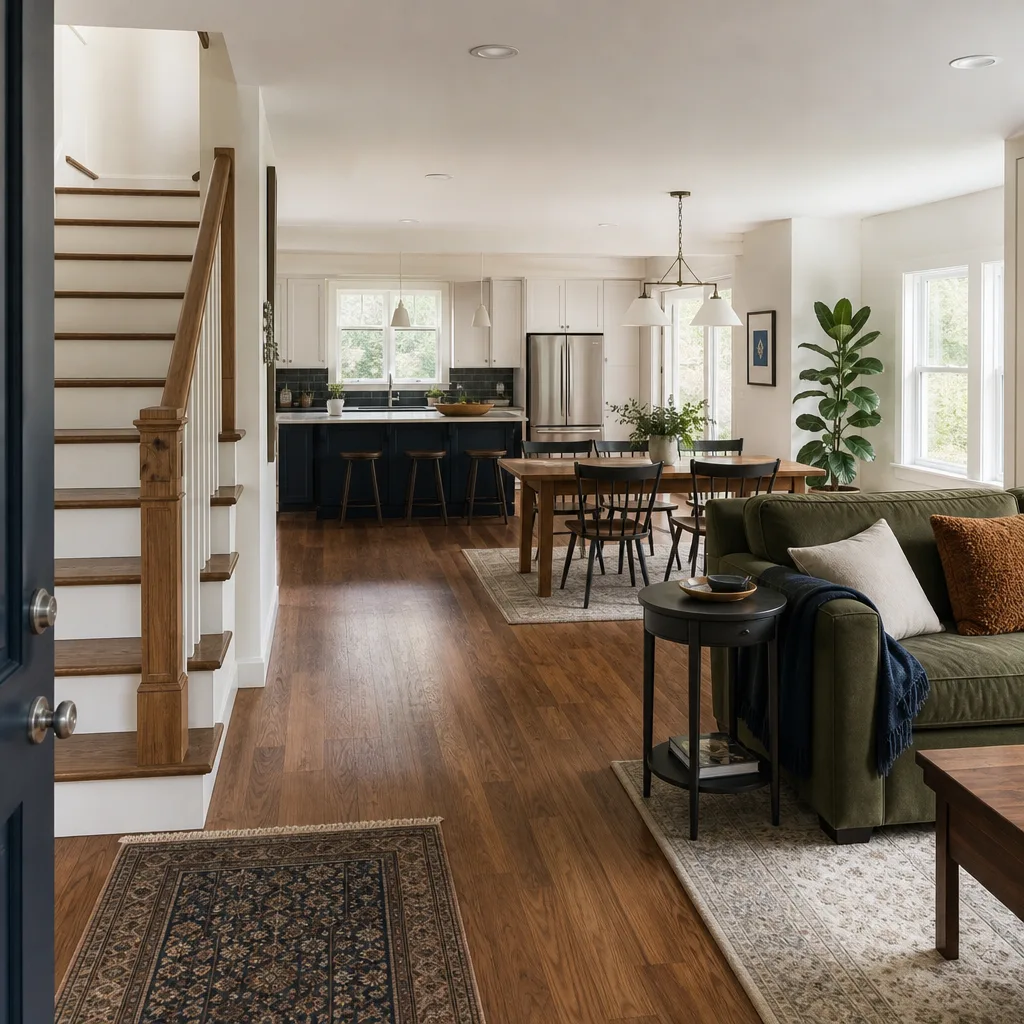
This is the cleanest decision rule we can give you. If the repair scope is large enough to require a building permit, treat it as a replacement project and insist on a fixed price with the full scope written down.
The logic is simple. Permitted repair work carries replacement-level liability. The moment a permit is pulled, the inspector can require compliance on everything the scope touches, the contractor’s liability exposure climbs to replacement levels, and the hidden-condition risk is no longer the contractor’s alone. You’re holding a project that behaves like a replacement but gets priced like a repair, and that mismatch is where budgets die.
What falls into each bucket:
- Repair without permit: swapping a faucet or fixture, patching drywall, replacing a toilet, refinishing a tub, replacing a single cabinet door or drawer front. Scope is small, risk is contained, and the price should hold.
- Repair that usually needs a permit: moving or adding plumbing supply or drain lines, electrical work beyond a fixture swap, structural changes, anything touching a wet wall’s framing, replacing a shower pan. If a permit is involved, get a fixed price with the full contingency terms in writing.
- Replacement by default: a kitchen where more than half the cabinetry is being touched, a bathroom where the tile and waterproofing are both failing, anything where the repair opens a wall that hides multiple systems.
Related services in Vallejo: if you’re weighing a full kitchen rebuild, our Kitchen Remodeling in Vallejo page breaks down scope and pricing ranges. For bathrooms, the Bathroom Remodeling in Vallejo page covers the waterproofing and substrate details that drive the repair-versus-replace call.
How to Compare Repair and Replace Bids Apples to Apples
Most homeowners compare bids by the bottom number, and that’s the fastest way to pick the wrong one. A $3,200 repair bid and a $14,000 replacement bid aren’t comparable until you line up four things side by side.
- Warranty length. Ask exactly how many days of coverage each bid includes and what triggers a return visit. Bradford’s 365-Day Done Right Promise gives every completed project a full year of written coverage; if the work fails inside that window, we come back and correct it at no charge. A repair bid with a 30-day verbal promise isn’t in the same category as a replacement bid with a year in writing.
- Written guarantee terms. Get the guarantee in writing and read what it actually covers. Does it cover labor, materials, or both? Does it cover the failure recurring in the same spot? A guarantee you can’t read and hold someone to isn’t a guarantee.
- Payment schedule. Compare the structure, not just the total. A repair bid that asks for half up front and half on completion looks different from a replacement bid with milestone payments tied to inspection sign-offs. The payment schedule tells you how much risk the contractor is carrying versus how much they’re pushing onto you.
- What’s in the scope and what’s excluded. Both bids should state their exclusions in writing. The bid with more honest exclusions is usually the more reliable one, because it isn’t pretending the hidden conditions don’t exist.
When you line up those four columns, a repair that looked 70% cheaper often turns out to be a coin flip on final price with a fraction of the coverage. That’s the true cost comparison.
When Repair Is the Right Call
Repair wins under specific, verifiable conditions, and it wins big when they’re all present.
- Structural integrity is intact. The framing, subfloor, and load-bearing elements around the failure are sound. You can confirm this with a moisture meter and a careful inspection before committing.
- It’s a single-system failure. One valve, one fixture, one door, one failed piece of trim. The failure hasn’t spread to adjacent systems, and fixing it doesn’t require opening anything that hides plumbing, electrical, or structural work.
- No code upgrade trigger. The repair doesn’t require a permit, or if it does, the permit scope is narrow enough that the inspector won’t require adjacent compliance work. You’ve checked the permit history and the assembly around the failure predates no requirement that a simple repair will pull in.
- The existing finishes are in good shape. If the tile around a failing valve is solid and matches millwork you can still source, a repair preserves value you’d otherwise destroy. Delta and Moen replacement cartridges, for example, can restore a 20-year-old faucet to full function for a fraction of a new fixture, and American Standard toilets often outlast the wax ring that’s actually failing.
We pulled a shower valve out of a house over in the Heritage District last month where the homeowner expected a full bathroom rebuild. The valve cartridge was the real failure, the tile and substrate were sound, and the repair came in under $400. That’s the repair case at its best: one system failed, everything around it held, and the price was predictable because the scope was small enough to see in full.
When to Call a Pro
Some of this you can check yourself: the moisture meter reading, the permit history, whether a cabinet door is warped or the box itself is failing. But the moment a repair involves opening a wall, touching a drain line, or moving anything structural, call a pro. The hidden-condition problem is exactly the part a homeowner can’t see without opening things up, and guessing wrong on a load-bearing wall or a drain rough-in costs more than the inspection would have.
If you’re weighing a whole-house scope, start with our General Contractor in Vallejo page. For everything else, the Bradford Remodeling Co Vallejo home page has the overview of how we work and what The Garrison Standard means in practice: a written price before any work starts, background-checked and uniformed technicians on every job, and a live person answering the phone 24/7 rather than a voicemail queue. Our technicians have up to 22 years of experience, and we work from a documented roster of name-brand materials, including KraftMaid and Wellborn cabinetry, Cambria and Caesarstone surfaces, Kohler and Moen fixtures, and James Hardie exterior products, so specifications are traceable and quality isn’t left to guesswork.
The Bottom Line
Repair is the right call when the failure is contained, the structure around it is sound, and no permit will drag adjacent code compliance into the scope. Replace when the repair requires a permit, when hidden damage is likely, or when the assembly around the failure is already at end of life. Either way, compare bids on warranty length, written guarantee terms, and payment schedule, not just the bottom number, and get the price in writing before anything gets opened up.
If you’re in Vallejo and need help, Bradford Remodeling Co Vallejo offers free estimates – call (844) 560-4789. We’ll walk your house with you, tell you which parts are genuinely repairable, and give you a written price on the replacement scope if that’s the smarter call.
Frequently Asked Questions
A contained repair, like a shower valve cartridge or a toilet reset, usually runs $250 – $450. A repair that opens a wall and touches plumbing or framing typically runs $1,800 – $6,000 once hidden conditions are priced in. The range is wide because the scope is a guess until the wall comes down. Call (844) 560-4789 for an exact quote – estimates are free.
On a properly written bid, no. Bradford gives a written price before work starts with no numbers that move at the door. On repair work, we write the contingency terms into the bid before demolition, so you know exactly what triggers a price change and by how much. If a contractor won’t put that in writing, that’s the signal to walk.
Yes. Any work requiring a permit is permitted and inspected before we close the job. We check the permit history on every Vallejo house before we scope a repair, because unpermitted prior work can turn a simple repair into a code-compliance project. To find out what your address needs, call (844) 560-4789.
A contained repair is usually a single day. A repair that opens a wall runs two to four days including inspection. A replacement project runs two to six weeks depending on scope, material lead times, and inspection scheduling. Your written estimate includes a projected timeline. Call (844) 560-4789 to schedule your free estimate.
Written by the team at Bradford Remodeling Co Vallejo.
Need Construction Help?
Call Bradford Remodeling Co Vallejo - licensed & insured, here with fast after-hours help in Vallejo.
(844) 560-4789