Last updated November 17, 2026
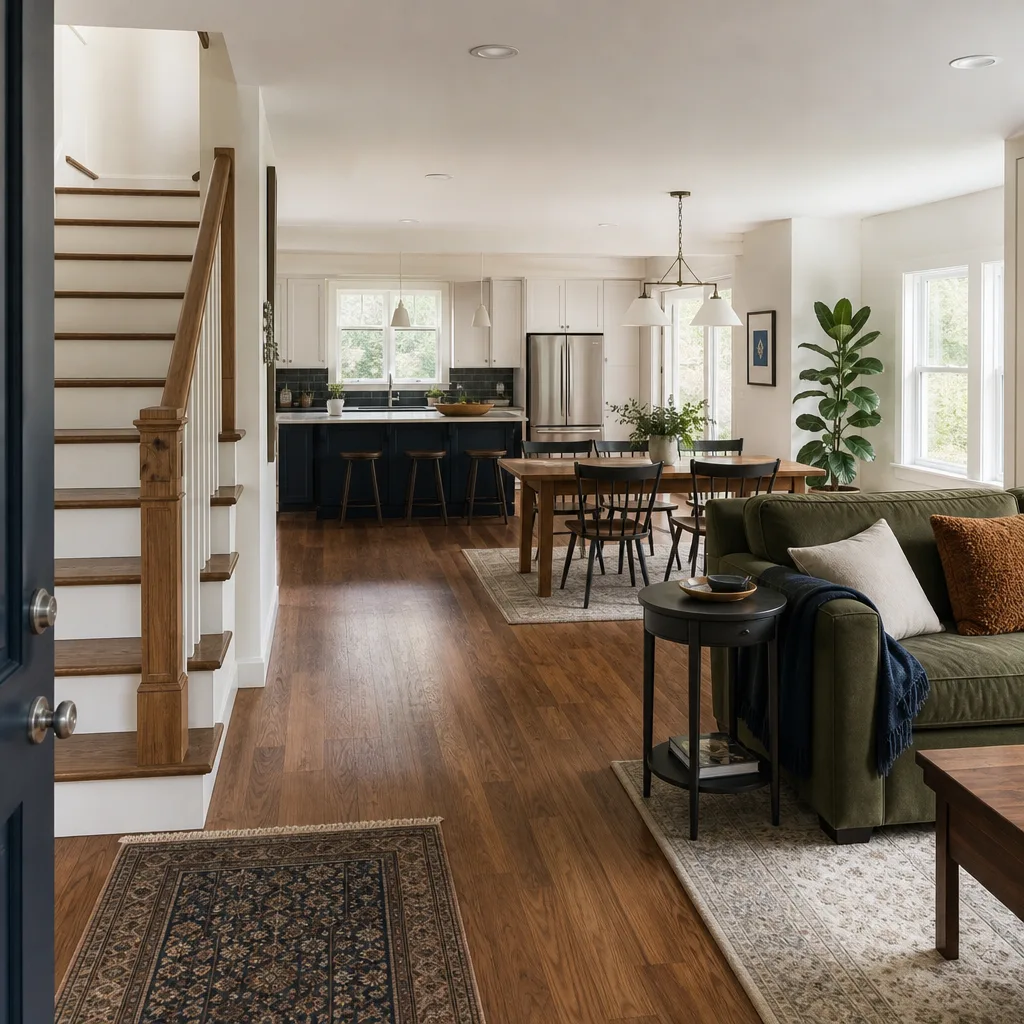
Free written scope consultation - allowances, timeline, and change-order rules on paper before a single trade is scheduled
DIY vs Professional Kitchen Remodeling: What’s Safe to Do Yourself
Installing your own kitchen cabinets is legal and commonly done. But if the cabinet layout doesn’t account for the dishwasher drain loop height, your dishwasher warranty is void and so is any water damage claim that follows. That single detail explains the whole problem with DIY kitchen work: the dangerous decisions are the ones that look finished. This guide maps the line between what you can safely do yourself in a Vallejo kitchen and what will cost you more than it saves. You’ll get a task-by-task breakdown, real cost math, and the exact questions to ask before you pick up a pry bar.
Quick Answer
In a California kitchen remodel, you can legally and safely do demolition, painting, cabinet assembly, backsplash tile, and finish carpentry yourself. You cannot legally do gas appliance connections, new electrical circuits, or plumbing drain relocations without a licensed trade and a permit. Cabinet installation sits in the middle: legal for a homeowner, but only worth doing yourself if the layout respects appliance clearances, drain loop heights, and load-bearing walls.
Styles & brands we work with
- Kitchen remodeling
- Bathroom remodeling
- Home additions & ADU
- Roofing
- Windows & doors
- Driveway & pavers
- Fence
Table of Contents
- Where the DIY Line Falls in a Vallejo Kitchen
- Why Gas, Electrical, and Drain Work Aren’t DIY in California
- The Real Cost Comparison: DIY vs Professional
- The Cabinet Installation Gamble
- How to Structure a Hybrid Project Without Liability Trouble
- What to Tell Your Contractor Upfront
- What Inspection Failures Actually Cost
- Common Mistakes to Avoid
Where the DIY Line Falls in a Vallejo Kitchen
California draws a firm line between cosmetic work and work that touches the building’s systems. Painting a cabinet box is cosmetic. Running a new 20-amp circuit for a microwave drawer is not. The distinction matters in Vallejo because older homes in neighborhoods like Heritage District and the Mare Island flats often have wiring and plumbing that predate modern code, so “just swapping a fixture” can expose a problem that requires permitted work.
Here’s the honest split, based on what we see on job sites across Vallejo:
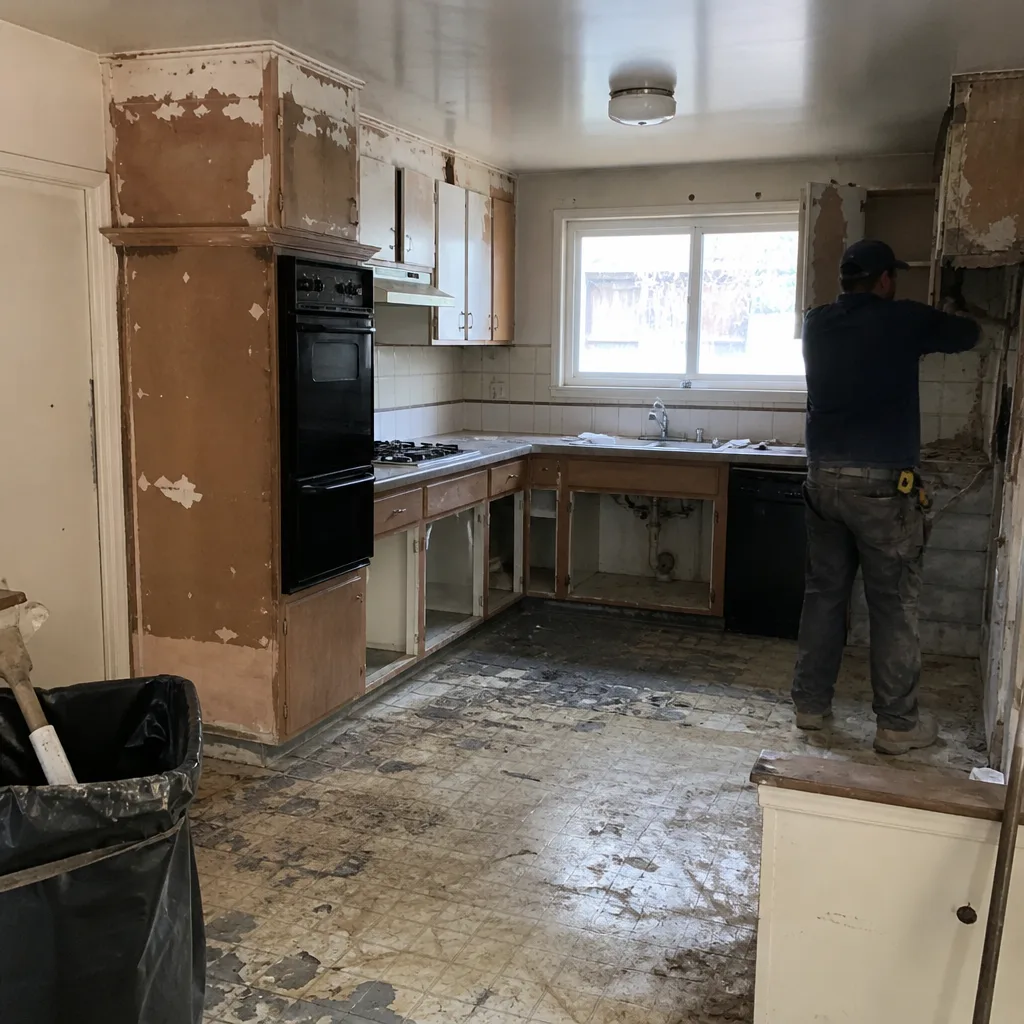
- Safe and legal to self-perform: demolition and haul-away, drywall patching, painting, cabinet assembly (flat-pack or pre-built box assembly), backsplash tile, trim and finish carpentry, appliance swap-ins where the hookup already exists, and flooring installation over a sound substrate.
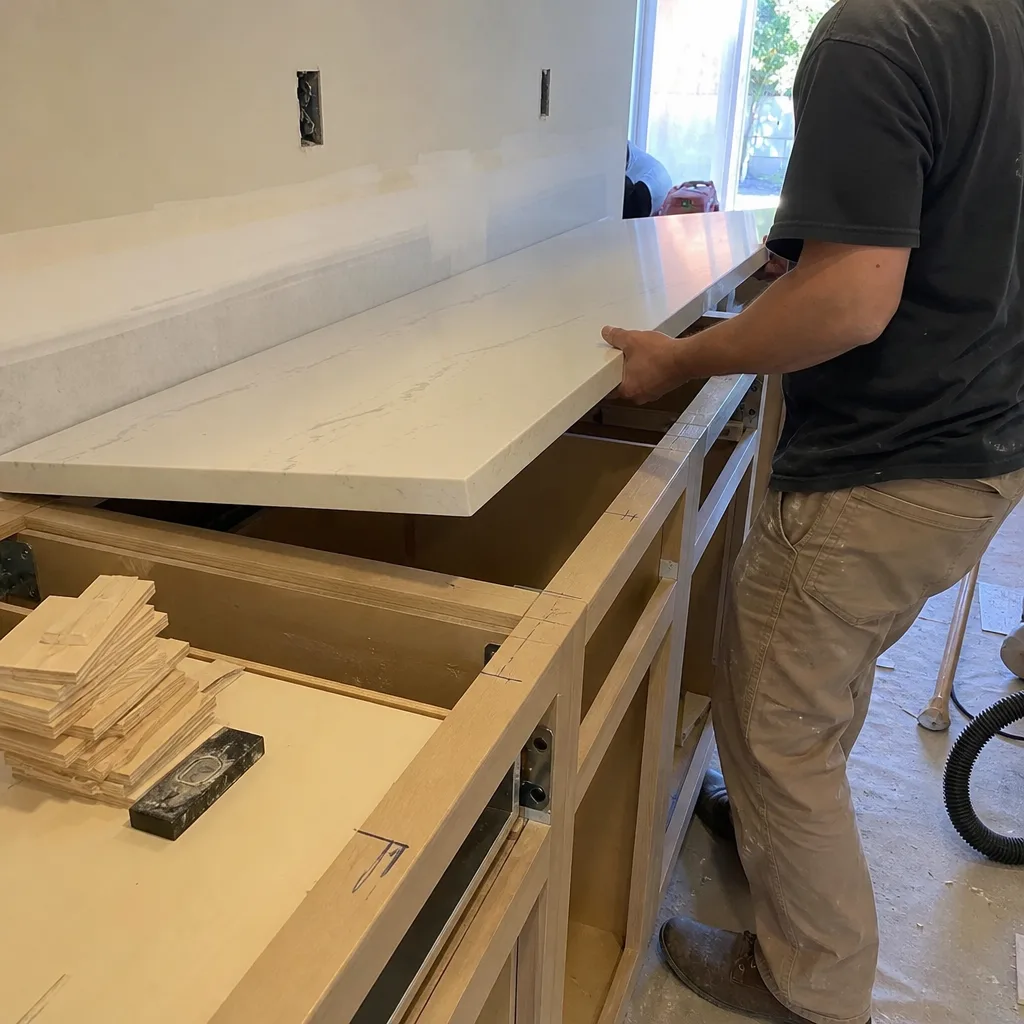
- Legal but risky to self-perform: hanging upper cabinets, installing base cabinets on an uneven floor, cutting countertop openings, and setting a sink into an existing cutout. These don’t require a license but they fail quietly.
- Not DIY in California: gas line connections and appliance hookups, any new or relocated electrical circuit, plumbing drain relocations, and anything requiring a building permit that names a licensed contractor as responsible party.
The middle category is where most homeowners get into trouble. Hanging an upper cabinet seems like a two-person Saturday job until you hit a wall that isn’t plumb by three-quarters of an inch, which is common in Vallejo’s older housing stock. Then the cabinet doors don’t align, the crown molding gaps, and you’re paying someone to rehang what you already hung.
Why Gas, Electrical, and Drain Work Aren’t DIY in California
This isn’t about skill level. It’s about legal responsibility and warranty. In California, gas appliance connections require a licensed contractor, and the work is inspected. Electrical circuit additions require a permit and inspection through the local building department. Plumbing drain relocations fall under the same permit-and-inspect system. If you do the work yourself without a permit and something fails, your homeowner’s insurance can deny the claim.
The consequences stack up in ways homeowners don’t expect:
- The inspection failure: If you pull a permit as an owner-builder and the work fails inspection, you pay for the re-inspection and the correction. In Vallejo, correction timelines run from days to weeks depending on the inspector’s schedule.
- The warranty void: Appliance manufacturers void warranties when installation doesn’t meet their spec. A gas range connected without a proper shutoff valve and sediment trap voids the warranty on day one.
- The insurance problem: If an unpermitted gas connection causes a fire or a slow leak causes water damage, your insurer can deny the claim on the basis of unpermitted work. That’s a five-figure risk on a task that costs a few hundred dollars to do right.
- The resale snag: Unpermitted work surfaces during a buyer’s inspection. In Vallejo’s market, a kitchen with unpermitted electrical or gas work can kill a sale or force a price reduction that dwarfs the original savings.
Gas is the one we flag hardest. A slow gas leak doesn’t announce itself. It accumulates. If you’re not trained to pressure-test a connection and check for leaks with a proper detector, you’re gambling with your family’s safety on a task a licensed plumber completes in an afternoon.
The Real Cost Comparison: DIY vs Professional
The savings from DIY are real but narrower than most homeowners expect. We’ve watched enough Vallejo projects to know the break-even point. Here’s the honest math, using mid-range figures for this market:
- Cabinet installation: Professional install runs roughly $1,800 to $3,500 for a standard kitchen. DIY saves most of that, but a single layout mistake that requires rehanging or replacing a cabinet can eat $600 to $1,200 in correction costs.
- Interior painting: Professional painting of a kitchen runs roughly $800 to $1,800. DIY saves $600 to $1,400 after materials. This is the safest DIY money in the project.
- Backsplash tile: Professional installation runs roughly $900 to $2,200 depending on tile. DIY saves $500 to $1,500. Mistake risk is moderate; a bad substrate shows up as cracked grout within a year.
- Demolition: Professional demo and haul-away runs roughly $400 to $900. DIY saves nearly all of it if you have a truck and a dumpster plan. Nothing wrong with this one.
- Electrical circuit additions: Professional runs roughly $600 to $1,800 per circuit with permit and inspection. There is no safe DIY here. This isn’t a savings opportunity, it’s a liability you can’t absorb.
- Gas appliance connection: Professional runs roughly $150 to $350. The DIY “savings” here is the most expensive money you’ll ever save.
Add up the genuinely DIY-able tasks (paint, demo, tile, finish trim) and a Vallejo homeowner can realistically save $2,000 to $4,000 on a $30,000 kitchen. That’s the real number. If a contractor quote makes DIY look like it saves $15,000, something in the quote is either wrong or covering work you can’t actually do. The tasks you should never self-perform are the ones that carry downstream liability, and no savings justifies that trade.
The Cabinet Installation Gamble
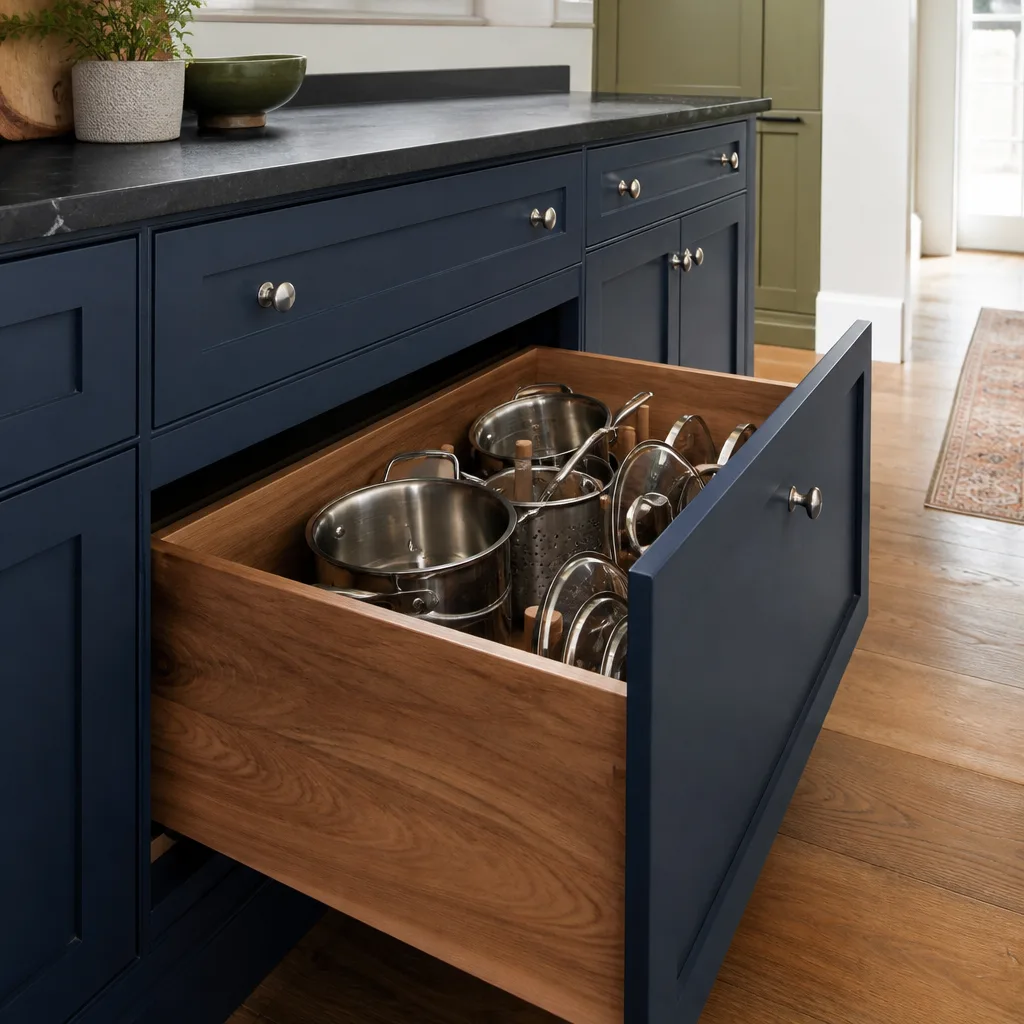
Cabinet installation is the centerpiece of most DIY kitchen plans, and it’s where the hidden failures live. The drain loop is the clearest example. A dishwasher drain hose must loop up to a high point below the countertop before connecting to the disposal or drain. If the cabinet layout puts the dishwasher too far from the sink, or places a drawer bank where the loop needs to rise, the hose runs flat. Water siphons back into the dishwasher. The warranty is void, and any water damage claim is denied because the installation didn’t meet spec.
We’ve seen this in Vallejo kitchens where homeowners bought cabinet lineups from a big box store without a layout drawing that accounted for appliance clearances. The cabinets fit. The kitchen looks finished. Six months later the dishwasher fails and the floor underneath is soft.
Other cabinet mistakes that surface later:
- Hanging uppers without confirming the wall is load-bearing. In older Vallejo homes, interior walls are sometimes furring strips over masonry, and standard cabinet screws don’t hold.
- Installing base cabinets on a floor that isn’t level. The countertop gaps, the dishwasher won’t slide in, and the toe kick doesn’t sit flush.
- Skipping the filler strips at the wall. Cabinets bow, doors rack, and the reveal at the wall shows a wavy line.
- Mounting cabinets before the electrical rough-in is final. You end up cutting into brand-new cabinet backs for outlet boxes that should have been planned first.
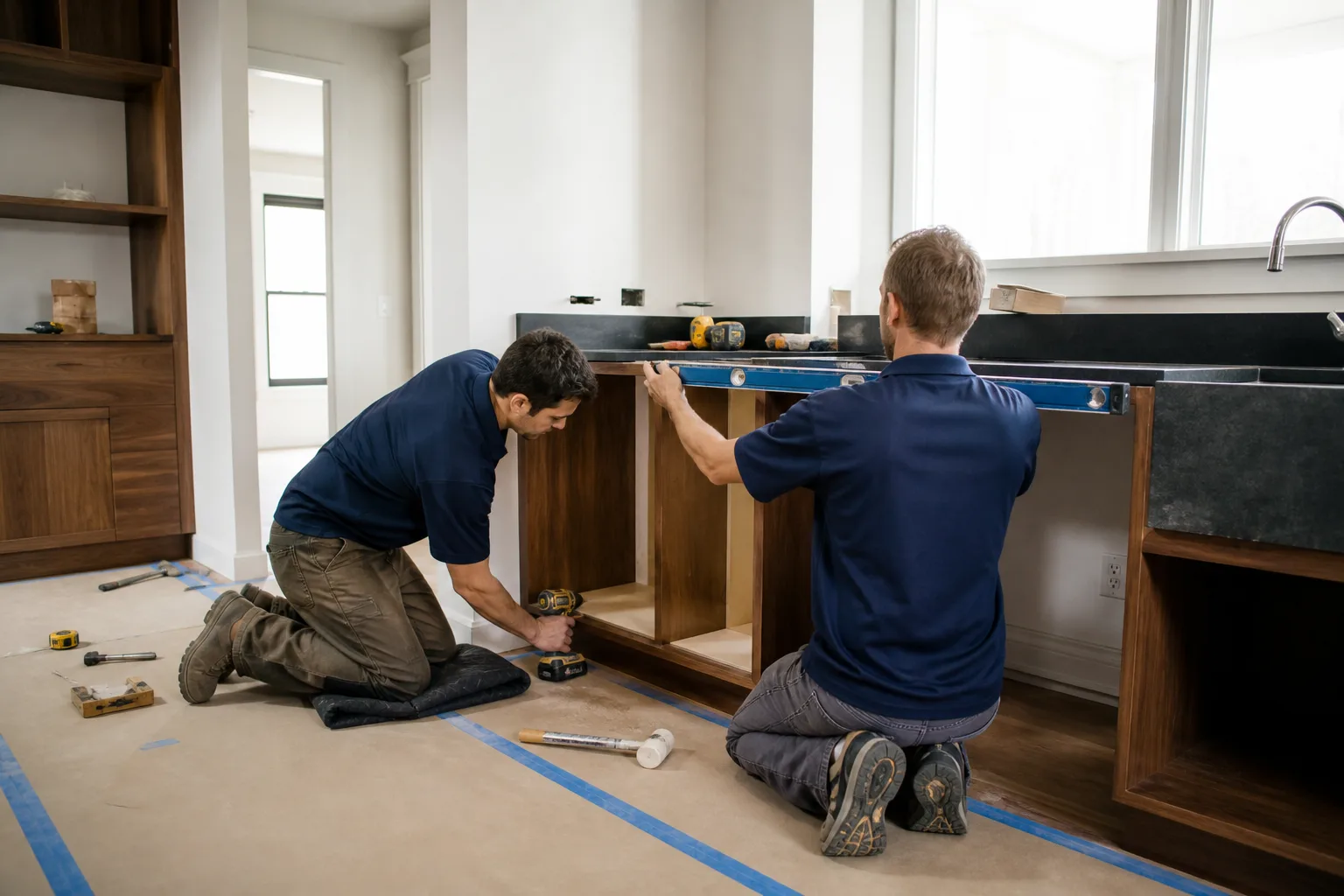
If you’re set on installing your own cabinets, the one non-negotiable is a real layout drawing that shows appliance clearances, the drain loop height, and the electrical outlet locations. Get that before you buy a single box.
How to Structure a Hybrid Project Without Liability Trouble
A hybrid project is the smartest version of DIY for most homeowners: you own the prep and finish, a licensed contractor owns the rough work. The trick is sequencing it so nobody is warranting work they didn’t do. Here’s how we structure these when a Vallejo homeowner wants to do part of the job:
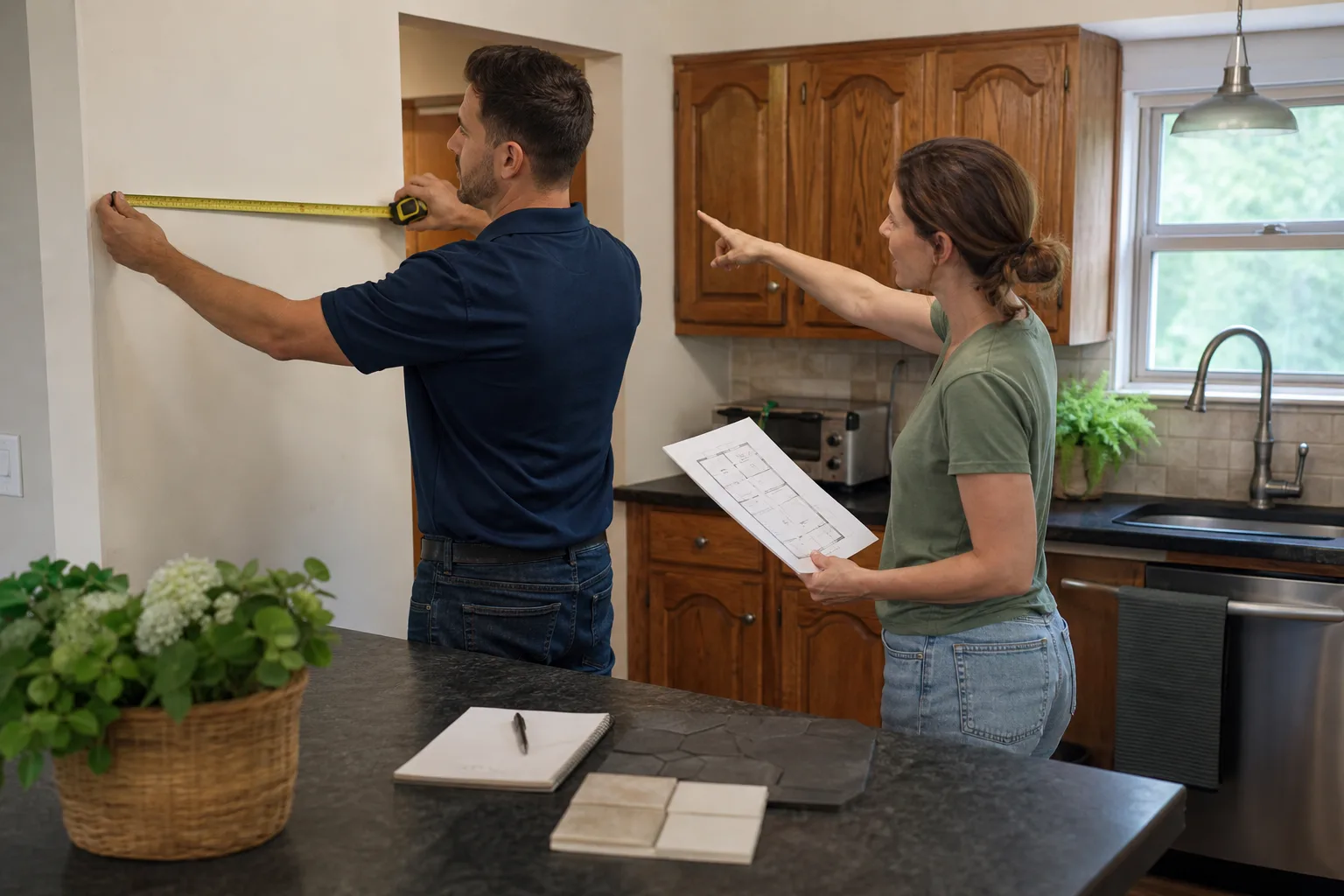
- Start with a written scope that assigns every task. List each task by name and mark who owns it. Demolition: homeowner. Electrical rough-in: contractor. Cabinet install: homeowner. Countertop template and install: contractor. This document is the single most important piece of paper in the project.
- Complete the rough work first, and get it inspected. Electrical, plumbing, and gas rough-in happen before drywall goes up. The permit is signed off at this stage. Everything you do afterward sits on top of inspected work.
- Sign off on the rough-in before you take over. The contractor should walk the rough-in with you, confirm it’s complete and inspected, and put that in writing. From that point, your work is your work.
- Keep a clear line between your tasks and the contractor’s warranty. If the contractor installs the countertop and you installed the cabinets underneath, a countertop crack caused by an unlevel cabinet is your problem, not theirs. Get that understanding in writing before the countertop goes in.
- Bring the contractor back for final inspection and sign-off. Your finish work doesn’t get covered by their guarantee, but the final walk-through confirms the systems they installed are correct.
This isn’t a bureaucratic hoop. It’s what keeps the 365-Day Done Right Promise honest. If Bradford Remodeling Co Vallejo warrants the work, we need to know exactly what we warrant. A homeowner’s cabinet installation isn’t covered by our written guarantee, and we’ll say that plainly before the job starts. What we do cover is the work we performed, and it’s covered in writing for a full year.
What to Tell Your Contractor Upfront
Say it in the first conversation: “I want to do some of this myself. What can’t you warrant if I do?” The contractors worth hiring will give you a clear answer. The ones who dodge that question are telling you something about how they’ll handle the rest of the project.
Here’s the conversation you want to have, and the answers to listen for:
- Tell them which tasks you plan to do before they quote. It changes the scope, the price, and the sequence. A contractor who knows you’re doing your own cabinets will plan the countertop template differently.
- Ask them to name their exclusions in writing. “The following items are homeowner-performed and not covered by the contractor’s guarantee” belongs in the contract. If it isn’t there, ask for it.
- Confirm the permit responsibility. If the contractor pulls the permit, they’re the responsible party for the work under that permit. Any task you take on outside the permit still needs to be code-compliant, and they’ll tell you which tasks those are.
- Get the schedule in writing. Hybrid projects fail on sequencing, not on skill. A written schedule that shows when your tasks start and end keeps the trades from arriving to an unfinished room.
This is where The Garrison Standard shows up in practice. The written price comes before any work starts. The scope is documented. The exclusions are on paper. There are no change orders that appear at the door. If a homeowner is doing part of the work, everyone knows the boundaries before a tool comes out. If you want to see how that runs in Vallejo, start with our kitchen remodeling in Vallejo page or look at the broader general contractor in Vallejo scope.
What Inspection Failures Actually Cost
An inspection failure on a homeowner-performed task costs more than the correction itself. It costs time, and time on a kitchen remodel means weeks without a functioning kitchen. In Vallejo, a failed electrical rough-in inspection typically adds one to three weeks to the schedule while you wait for a re-inspection slot.
The cost is also reputational with your own contractors. If a plumber shows up to set a fixture and discovers the rough-in beneath it is wrong, they can’t finish. They go away, you pay for a return visit, and the correction may require opening the wall you just closed. That’s how a $400 plumbing task becomes a $1,200 repair.
The pattern we see most in Vallejo:
- Drywall closed over plumbing that was never inspected. The correction requires demolition and re-inspection. It’s the single most expensive do-over in a kitchen.
- Electrical outlets boxed into the cabinet zone without a plan. The outlets land where the upper cabinets go, or too far from the countertop. Correcting it requires new circuits at the panel.
- Gas shutoff valve omitted behind a range. The range fails final inspection, and the correction costs more than the original connection.
- Water supply lines routed through cabinet toes. The cabinet installer punctures a line, water runs under the flooring, and the whole floor comes up.
If you’re doing any work that falls under a permit, the inspection has to pass before anything covers it. That’s the line. Everything after the inspection is yours to finish; everything before it belongs to a licensed trade.
Common Mistakes to Avoid
- Buying cabinets before the layout drawing. A layout that respects appliance clearances, drain loop heights, and outlet placements is the foundation of the whole kitchen. Without it, the boxes will arrive and the details won’t fit.
- Assuming the floor is level. Very few Vallejo kitchens have a level floor, especially in older homes. Check it with a level and a story pole before the base cabinets go down.
- Hanging cabinets on a wall you haven’t checked for load-bearing capacity. Interior furring-over-masonry walls look like standard walls and aren’t. Anchor into studs or add blocking before you hang anything heavy.
- Doing your own gas connection to save $200. The connection is the cheapest line item in the project and the most expensive mistake in the whole remodel. Licensed plumber, permit, inspection, done.
- Rendering tile over an uneven substrate. Vallejo’s older homes have walls that are out of square by more than an inch. Backer board goes over a flat, sound substrate or the grout cracks within a year.
- Not telling the contractor what you plan to DIY. The quote changes, the sequence changes, and the warranty exclusions change. Say it upfront, get it in writing, keep the scope document current as the project moves.
- Patching drywall over inspected rough-in before the inspection sign-off. The rough-in has to be visible for the inspector. Covering it before sign-off means opening it back up to pass.
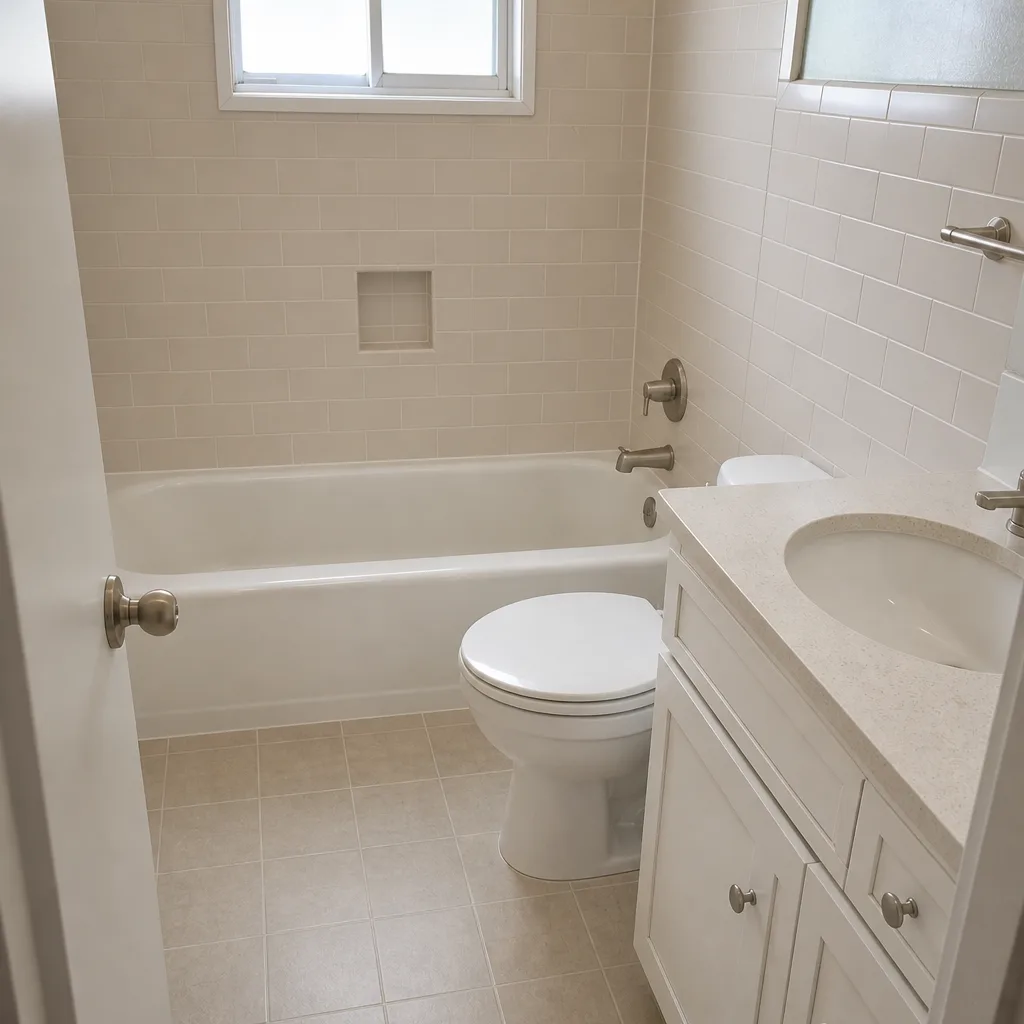
See the difference
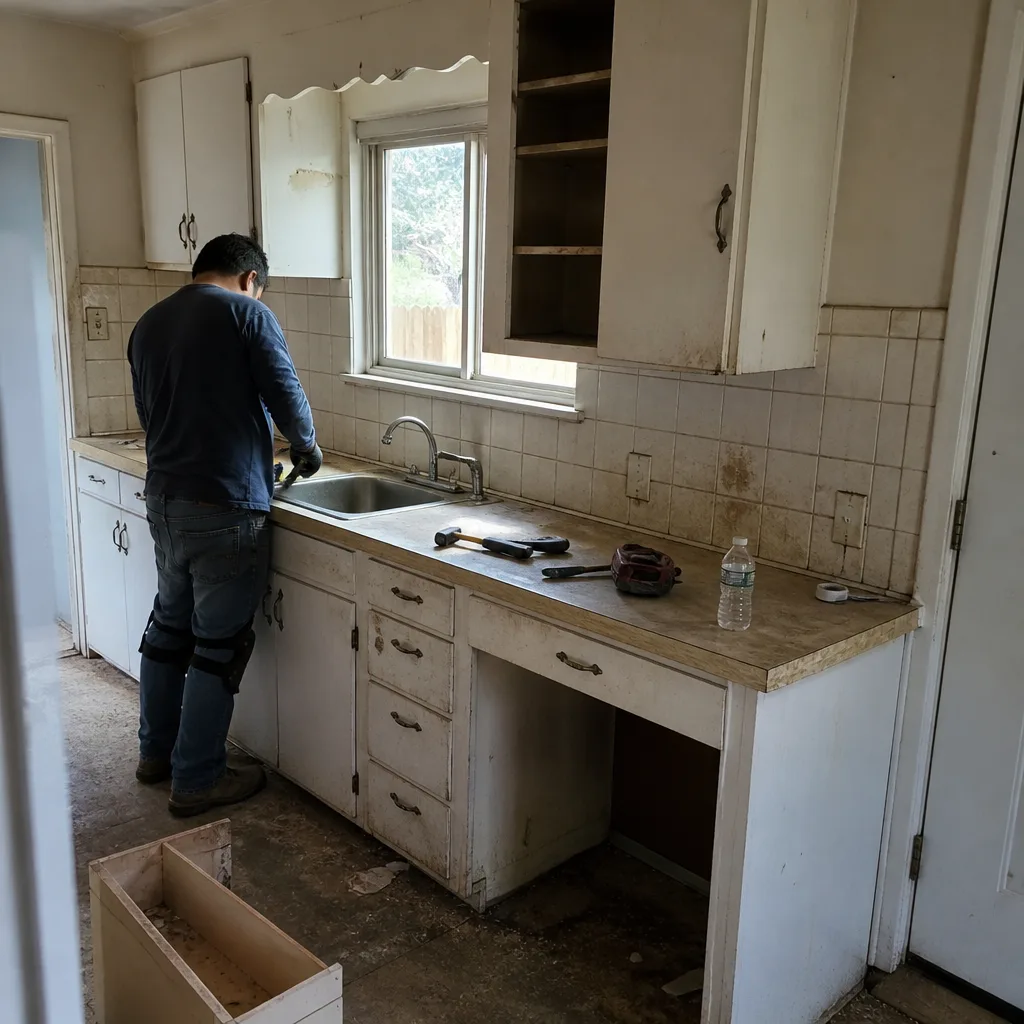 Before
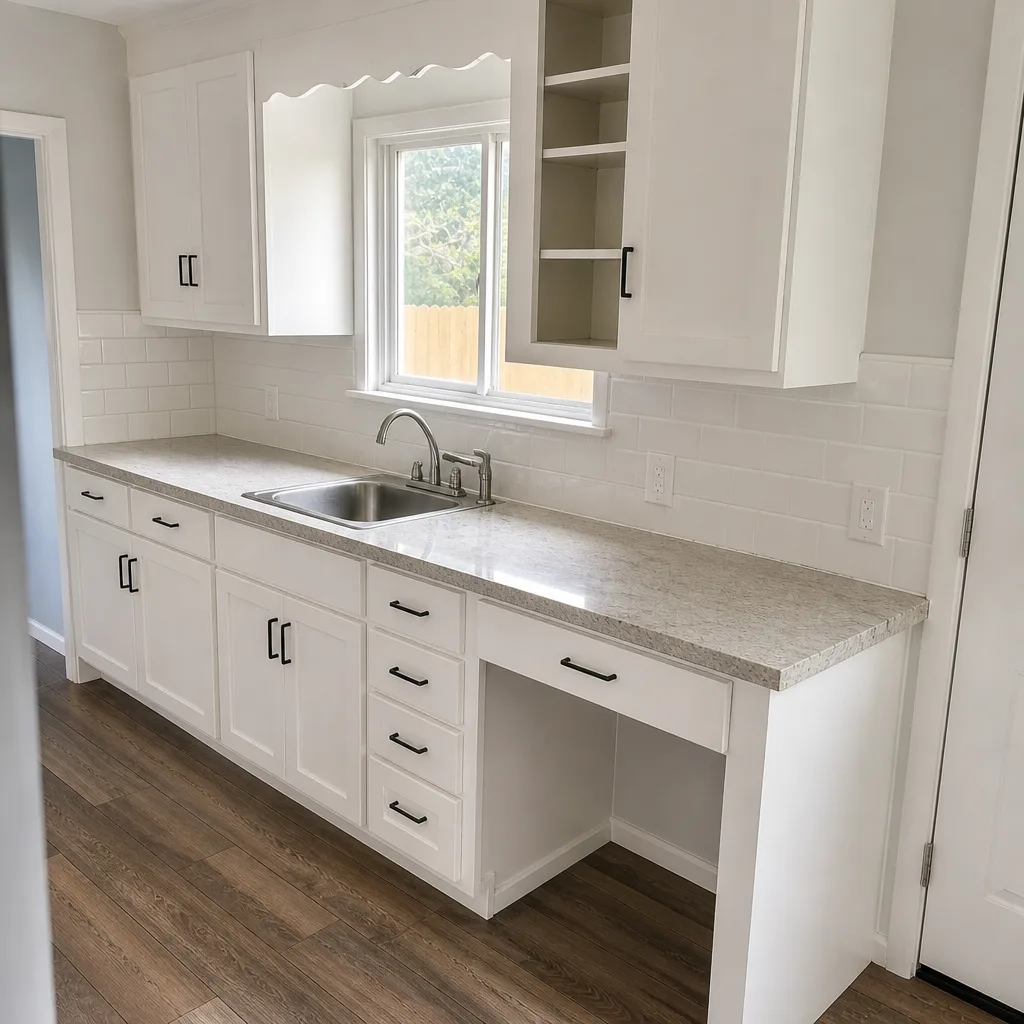 After
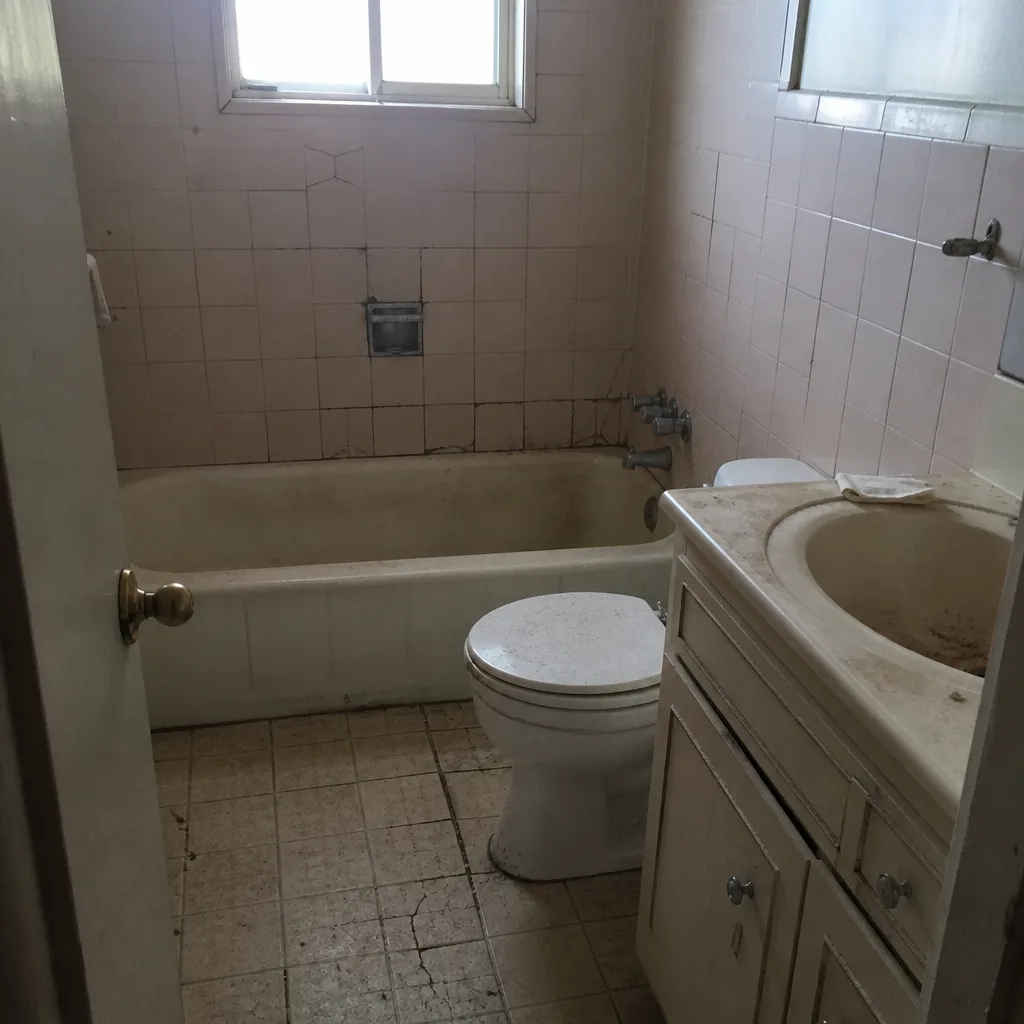 Before
 After
 Before
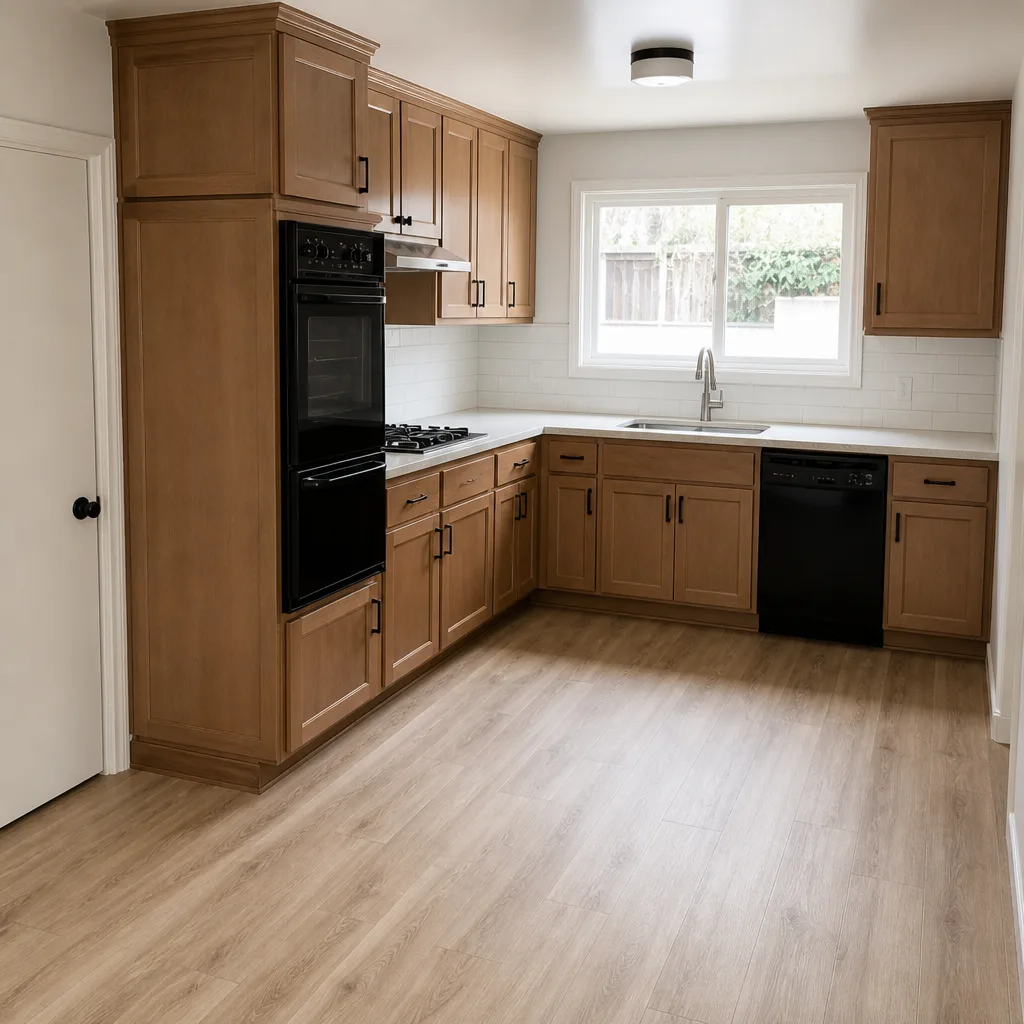 After
When to Call a Professional
Call a professional for anything that touches gas, electrical circuits, plumbing drain relocations, structural work, or building permit sign-off. Call for cabinet installation if the layout hasn’t been drawn, for countertop templating and installation, and for any finish work where a mistake costs more to correct than the labor saved. In Vallejo, the older housing stock makes plumbing and electrical work more unpredictable, so the threshold for calling a pro is lower than in newer construction. Our technicians have up to 22 years of experience, and we’ve seen the do-over costs that follow the wrong DIY decision. Bradford Remodeling Co Vallejo offers free estimates in Vallejo, and every price is written before work starts. Call (844) 560-4789 to schedule yours.
Frequently Asked Questions
Yes, a California homeowner can legally install their own kitchen cabinets without a license. It’s legal but not risk-free: cabinet installations that don’t account for dishwasher drain loop height, appliance clearances, and load-bearing walls can void appliance warranties and cause water damage. Get a layout drawing first, and check the floor and walls before you hang anything.
Yes, backsplash tile is one of the better DIY tasks in a Vallejo kitchen. The savings run $500 to $1,500 over professional installation, and a mistake is contained to the wall. The failure mode to watch for is tile over an uneven substrate, common in older Vallejo homes, which shows up as cracked grout within a year.
In California, gas appliance connections require a licensed contractor and an inspection. Beyond the legal requirement, a homeowner-performed gas connection voids the appliance warranty and can cause your homeowner’s insurance to deny a claim if a leak causes damage. The professional connection costs $150 to $350 and is the best money in the whole kitchen project.
No, adding or relocating a kitchen electrical circuit requires a licensed electrician and a building permit in California. You can legally replace a light fixture or a receptacle on an existing circuit in many cases, but new circuits, relocated outlets, and anything that touches the panel belong to a licensed trade. Call (844) 560-4789 if you want a free estimate that covers the electrical scope correctly.
Tell them before the quote, not after. Name the specific tasks you intend to perform, ask them to list exclusions in writing, and confirm the sequencing plan. The contractors worth hiring will tell you clearly which tasks they can’t warrant if you do them yourself, and they’ll put it in the contract.
A typical Vallejo homeowner saves $2,000 to $4,000 on a $30,000 kitchen by doing demolition, painting, backsplash tile, and finish trim themselves. The larger DIY savings pitches you hear usually involve self-performing electrical, plumbing, or gas work, which isn’t legal in California and which nobody should count as a savings line. Get a free written estimate in Vallejo before you commit to a plan.
The Bottom Line
DIY kitchen work has a narrow, real place in a remodel: demolition, paint, backsplash tile, and finish trim are the tasks where you save money without creating downstream liability. Cabinet installation is legal for a homeowner but only worth doing if you have a layout drawing that respects appliance clearances and drain loop heights. Gas, electrical, and plumbing drain relocations belong to licensed trades in California, no exceptions, and the inspection failures that follow DIY attempts cost more than the labor ever saved. The best version of a hybrid project starts with a written scope that names who does what. Get a free estimate, get the price in writing, and get the exclusions on paper before a tool comes out.
Ready to price your Vallejo kitchen remodel? Call Bradford Remodeling Co Vallejo at (844) 560-4789 for a free estimate. Every price is written before work starts, and every completed project carries the 365-Day Done Right Promise. You can also see our bathroom remodeling in Vallejo page if the project is expanding, or start at the Bradford Remodeling Co Vallejo home page to see the whole scope of what we do.
Written by the team at Bradford Remodeling Co Vallejo.