Last updated November 17, 2026
Free written scope consultation - allowances, timeline, and change-order rules on paper before a single trade is scheduled
How Long Does Kitchen Remodeling Take? Timelines and What to Expect
Cabinet lead times alone can run 6 to 14 weeks. Yet plenty of contractors hand a homeowner a “4 to 6 week” kitchen estimate without mentioning that the clock doesn’t really start until the cabinets land on the driveway. That gap between the number on the bid and the number on the calendar is where most kitchen frustration gets born. In Vallejo, the schedule gets set long before demo day: by permit issuance at City Hall, by cabinet and fixture lead times, and by how tightly the sub trades are sequenced. This guide breaks the timeline into its real phases, explains calendar time versus labor days, and shows you what a written schedule should actually contain so you can plan around it instead of being surprised by it.
Quick Answer
A typical kitchen remodel takes 6 to 10 weeks of active construction on site, but the full project usually spans 3 to 5 months from signed contract to final walkthrough once permit issuance and material lead times are counted. A light cosmetic refresh (paint, hardware, counters over existing boxes) can finish in 2 to 3 weeks. A full gut remodel with layout changes in Vallejo generally runs 10 to 16 weeks of construction, with permits and cabinet lead times pushing the calendar out further.
Styles & brands we work with
- Kitchen remodeling
- Bathroom remodeling
- Home additions & ADU
- Roofing
- Windows & doors
- Driveway & pavers
- Fence
Table of Contents
- Why Your Timeline Is Set Before Demo Day
- How Permit Timelines in Vallejo Affect the Schedule
- The Six Phases of a Kitchen Remodel, With Realistic Durations
- Calendar Time vs. Labor Days: Why a 6-Week Job Can Span 10 Weeks
- The Three Most Common Schedule Killers
- What a Written Schedule in Your Contract Should Actually Contain
- Timeline Scenarios by Project Type
- Common Mistakes to Avoid
Why Your Timeline Is Set Before Demo Day
The hammer swinging is the fastest part of a kitchen remodel. It’s everything lined up behind it that sets the clock. A kitchen is a relay race, and the baton has to be passed cleanly through roughly a dozen handoffs: designer to permit office, permit office to demo crew, demo crew to rough-in trades, rough-in to inspector, inspector to cabinet installer, cabinet installer to countertop fabricator, and so on. Every handoff is a place the schedule can slip.
Think about cabinets for a moment. A semi-custom line like KraftMaid or Wellborn commonly runs 6 to 10 weeks from order to delivery. If your design isn’t finalized and signed, that order hasn’t been placed, and nothing on site can finish until those boxes arrive. In our experience, homeowners are often told “we’ll start in two weeks,” then watch a stripped kitchen sit idle for a month because the cabinet order went in late. That idle time isn’t labor – it’s waiting, and it’s the single biggest reason quoted timelines miss.
The sequencing logic matters more than any one duration. If you understand that cabinets, countertops, and fixtures all have their own lead times and that each one gates the next trade, you can ask the right questions before signing. When these steps are laid out in writing, a Vallejo homeowner can plan a realistic kitchen remodel instead of hoping the contractor’s “4 weeks” holds.
How Permit Timelines in Vallejo Affect the Schedule
Before a single cabinet comes out, the project usually needs a permit, and how fast that permit issues sets the start date for everything else. In Vallejo, a straightforward kitchen permit with no structural changes often clears plan review in a matter of weeks, but the range is wide. A remodel that moves a wall, adds a window, or touches plumbing and electrical in new locations can require a longer review and occasionally plan-check revisions, which add another round of waiting.
Two things drive the permit clock:
- Scope complexity. Cosmetic-only work (paint, counters, cabinet fronts) often needs no permit at all. Moving plumbing, gas, or load-bearing walls always does.
- Completeness of the submittal. A drawing set that’s missing a dimension or a fixture spec gets kicked back, and the review clock restarts. A contractor who knows the local submittal standards gets through on the first pass far more often.
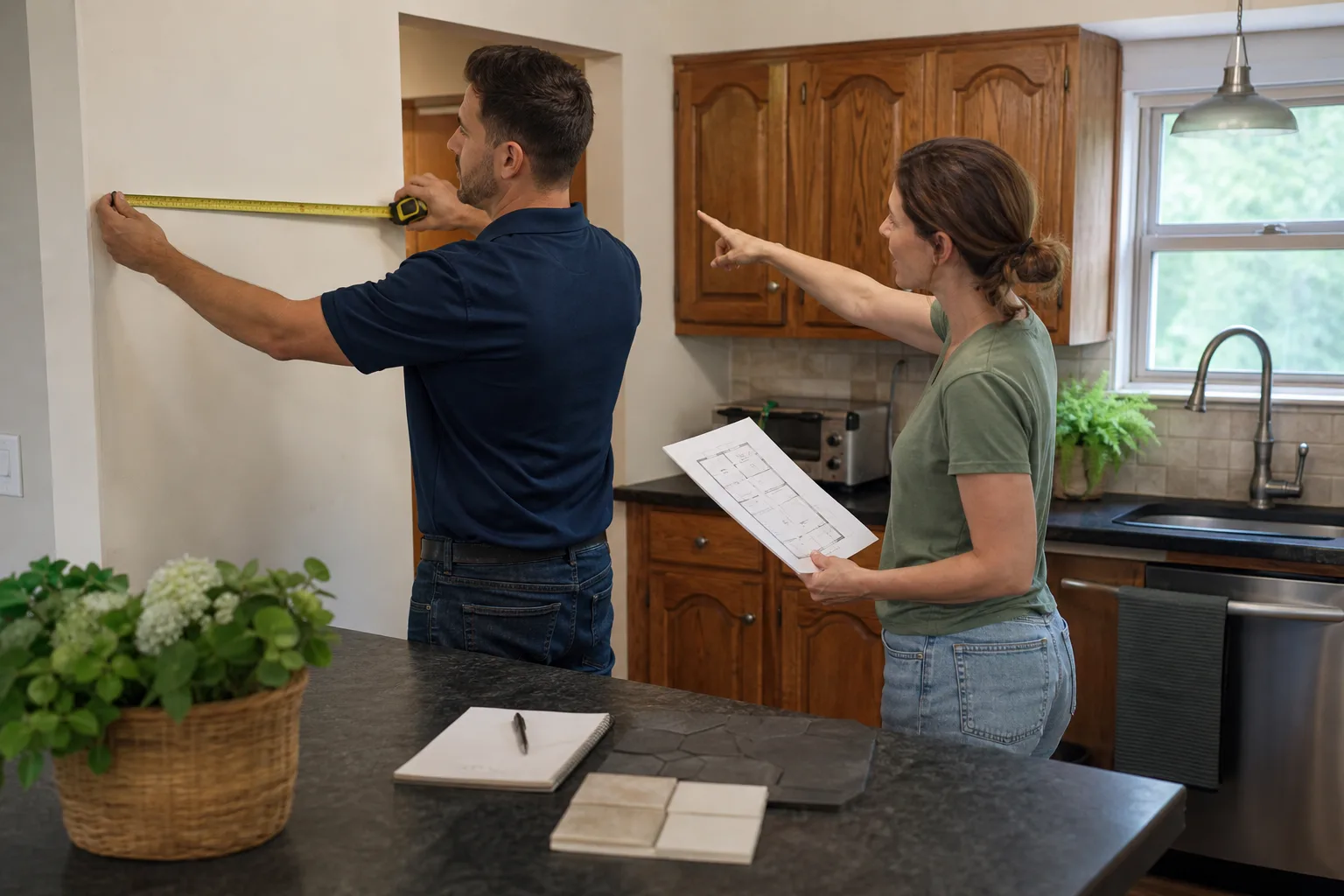
This is why we tell homeowners to count the permit weeks as part of the project, not as a pre-game formality. If plan review and issuance take four to six weeks, and your cabinets take eight, those two clocks can run at the same time – but only if the design is locked and both are kicked off together. The worst-case scenario is finalizing cabinets after the permit issues, which stacks 8 weeks onto 6 and hands you a 14-week wait before demo. Ask your contractor when the permit gets filed and when the cabinet order gets placed, and confirm both dates in the schedule. Get an estimate on paper before any of it begins so you know exactly what the permit-driven scope includes.
The Six Phases of a Kitchen Remodel, With Realistic Durations
Here’s how a full kitchen remodel actually breaks down on site once the permit is in hand. Durations are typical ranges for a mid-size kitchen in the Solano County market. Your numbers will vary with size and scope, but the sequencing rarely changes.
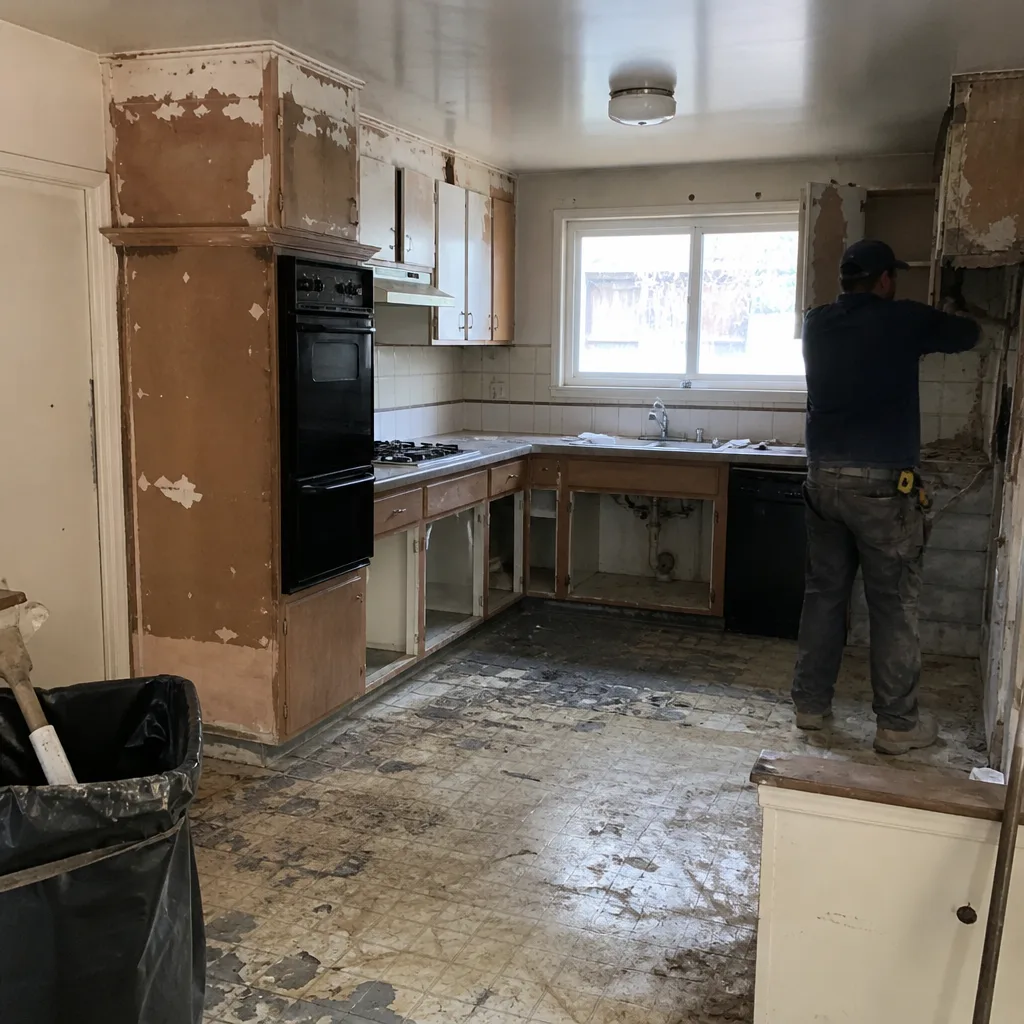
- Demo (2 to 4 days). Tear-out of cabinets, counters, flooring, and appliances. If there’s a surprise behind the wall – old galvanized plumbing, a hidden soffit, wiring that doesn’t match the plans – this is where it surfaces, and it’s the main reason demo can run long.
- Rough-in (1 to 2 weeks). Framing changes, new electrical circuits and outlets, plumbing moved for the sink or dishwasher, gas lines for the range, and HVAC adjustments. This is the phase where the kitchen’s skeleton gets rebuilt.
- Inspection hold (1 to 5 days). The rough-in gets inspected before walls close up. If it fails, the corrective work and reinspection can add days. We treat this hold as a real milestone, not a formality.
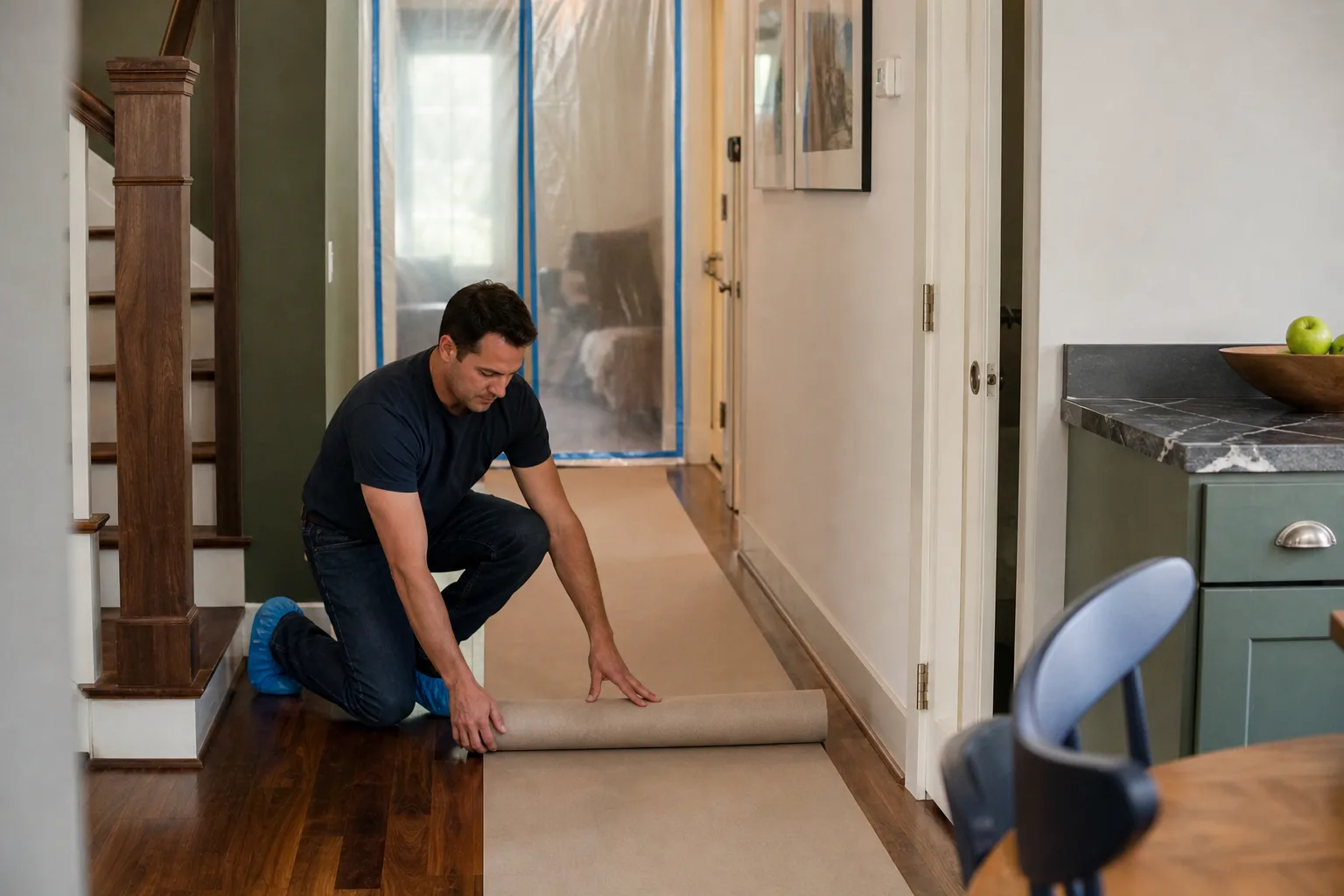
- Insulation and drywall (3 to 5 days). Walls close, seams get taped and mudded, then sanded. Dust control matters here, which is why a disciplined crew seals off adjacent rooms before this phase starts.
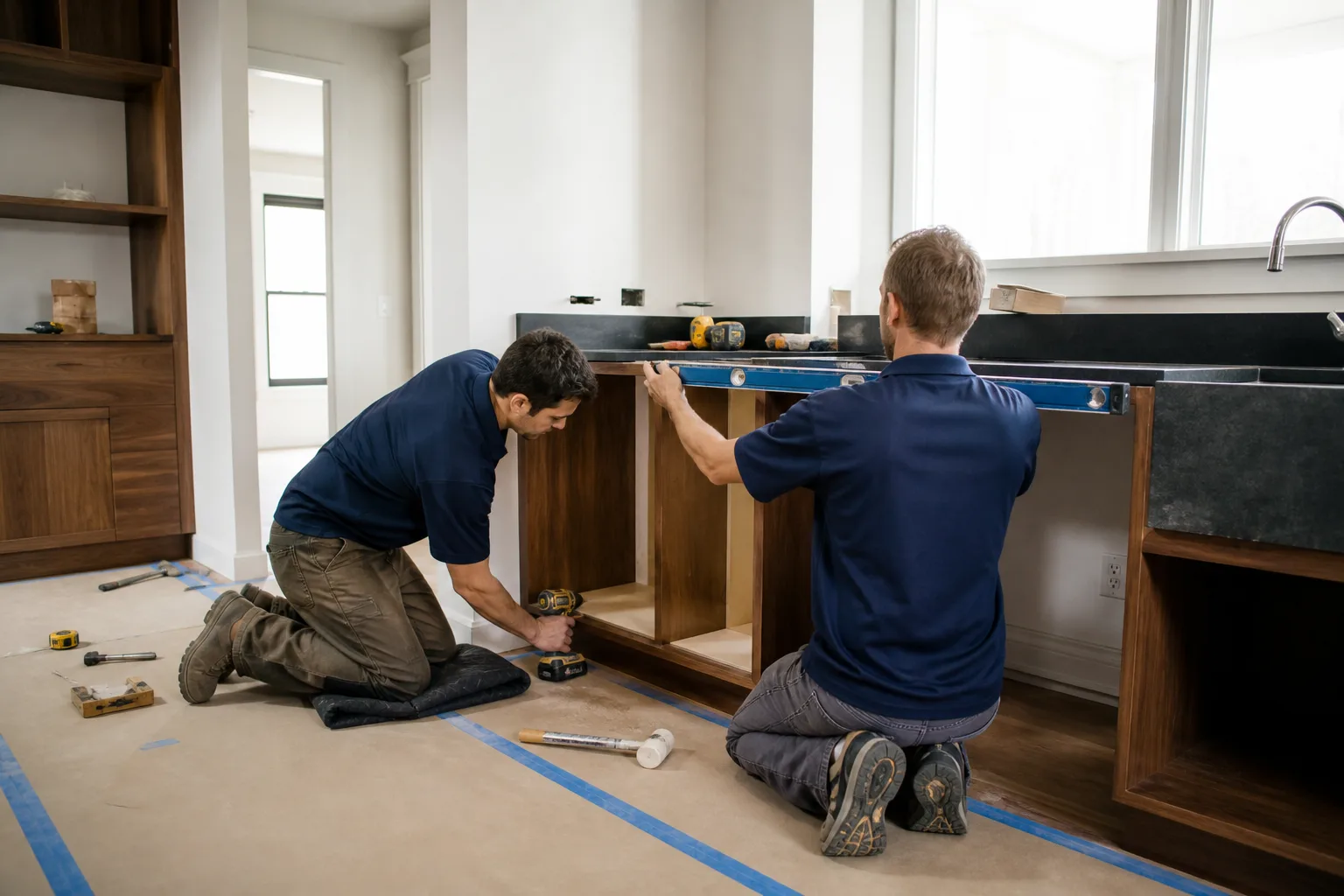
- Cabinet and countertop install (1 to 2 weeks). Cabinet boxes set and leveled, then countertop templating. A stone counter like Cambria or Caesarstone is templated after cabinets are in, then fabricated off site and installed a week or more later. That template-to-install gap is a built-in pause.
- Finish trades and punch list (1 to 2 weeks). Tile backsplash, plumbing trim, light fixtures, paint, flooring, and appliance hookup. Then the punch list: the small corrections that get the job truly closed. A written punch list with a completion date signed off is how a kitchen actually finishes.
Add those up and you get 6 to 10 weeks of on-site work for a full remodel. The bid’s “4 weeks” usually counts only the fastest phases and ignores the holds.
Calendar Time vs. Labor Days: Why a 6-Week Job Can Span 10 Weeks
Here’s the distinction that trips up almost every homeowner: a “6-week project” refers to working days on site, not six weeks on the wall calendar. The difference is the gaps – the days when no crew is present because the project is waiting on something. A countertop fabricator needs a week after templating. An inspector has to schedule a visit. Cabinet doors arrive short and need a replacement order. None of those are labor days, but they’re all calendar days.
A realistic way to translate one to the other:
- Active labor days: the actual working days a trade is on site. These are what a contractor quotes when they say “3 weeks for rough-in.”
- Waiting days: permit holds, inspection scheduling, material fabrication, back-order gaps. These add up fast – five to ten waiting days over a project is common.
- Buffer: a disciplined schedule builds in a small buffer for the surprises demo always finds. A schedule with zero buffer is a schedule that’s guaranteed to slip.
In our experience, that’s why a kitchen quoted at six weeks of labor commonly lands on the tenth week of calendar time. It isn’t incompetence. It’s the nature of a relay race with a dozen handoffs. The fix isn’t to demand a faster number – it’s to demand a schedule that shows both the labor weeks and the waiting periods honestly. When you know the calendar gaps are built into the plan, you can schedule your life around them instead of resenting them. If you’re comparing bids, choose the one whose General Contractor in Vallejo shows you the waiting periods, not just the fast phases.
The Three Most Common Schedule Killers
Most kitchens lose time in the same three places. Knowing them lets you head them off before they cost you weeks.
1. Back-ordered fixtures
A sink, faucet, range, or specialty hood that’s on back order stalls the finish trades. The plumbing rough-in can be done, but the sink trim waits for the sink. A faucet like a Kohler or Moen model that’s temporarily unavailable can hold the whole water-on milestone. The defense is to select and confirm lead times on every fixture before demo, and to have an approved substitution ready if one slips. Fixtures ordered on day one of demo are fixtures that show up late at the worst moment.
2. Failed rough-in inspections
If the plumbing or electrical rough-in doesn’t pass on the first try, the corrective work plus the reinspection can add days to a week. It also delays drywall, which delays cabinets, which cascades. Pass-first inspections come from a contractor who knows the local code requirements and inspects the work internally before calling the city. A permit that gets pulled and an inspection that passes on the first pass is worth real schedule time.
3. Sub-trade conflicts
A sub trade double-booked on another job, or a plumber who shows up a day after the drywall crew, wrecks the sequence. The cabinet installer can’t set boxes on an unpainted wall, and the electrician can’t wire fixtures if the drywall isn’t sanded. The schedule’s value is in forcing each trade to commit to a date, not a “sometime next week.” When trades are sequenced in writing, the conflicts get caught on paper before they cost a week on site.
What a Written Schedule in Your Contract Should Actually Contain
A start date and an estimated completion date are not a schedule. They’re two bookends that let a contractor say “we estimated four to six weeks” after the job runs to twelve. A real written schedule breaks the project into milestones with dates attached, so you can see where you are and hold the sequence accountable.
A schedule worth signing should include:
- Milestone dates, not just bookends. A date for demo start, rough-in completion, inspection, drywall completion, cabinet delivery, cabinet install, countertop template, countertop install, and final punch list.
- Material order dates and lead times. The date each cabinet, counter, fixture, and door gets ordered, plus the lead time for each. If it’s a Therma-Tru door or a specific appliance, the order date belongs on the schedule.
- The permit filing date and expected issuance window. So you know when the clock actually starts.
- The inspection hold as its own line item. A scheduled inspection date, not “to be determined.”
- The waiting periods named. The template-to-install gap, the cabinet delivery window, and the back-order risk on each fixture.
- A buffer line. A little slack built in for the surprises demo finds, so the schedule has room to absorb them.
- Your approval points. Where you sign off on selections and finishes, because a schedule that waits for a homeowner’s undecided backsplash paint color isn’t the contractor’s fault.
With a written schedule, and a written price to match, the whole project gets grounded. Bradford Remodeling Co Vallejo puts the price in writing before any work starts, and the schedule should be written the same way.
Timeline Scenarios by Project Type
Project scope drives the range more than anything else. Here’s how the timelines shake out across the most common kitchen jobs we see in Vallejo and the surrounding Solano County area.
- Cosmetic refresh (paint, hardware, lights, counters over existing boxes): 2 to 3 weeks of construction, often no permit required, minimal wait time. The main constraint is countertop fabrication if you’re changing surfaces.
- Mid-range update (new cabinets, counters, appliances, same layout): 5 to 8 weeks of construction, plus 4 to 8 weeks of cabinet lead time and roughly 2 to 4 weeks of permit review. Expect 3 to 4 months of calendar time.
- Full gut remodel (layout change, moved plumbing, new electrical): 8 to 12 weeks of construction, plus permit review and cabinet lead times. Plan on 4 to 5 months of calendar time.
- Structural or expanded kitchen (moving a wall, adding an exterior door or window): 10 to 16 weeks of construction, with longer plan review for the structural work. This is the range where a 5 to 6 month calendar window is realistic.
The Vallejo market adds its own wrinkles. Older homes in neighborhoods like Heritage District and the older stretches near the waterfront often hide outdated plumbing or wiring behind the walls, which shows up at demo and adds a day or two of rough-in. Homes built in the 1960s and 70s around the north side frequently need panel capacity checks before new appliance circuits go in. None of that is unusual for a Vallejo kitchen – it’s just part of the sequencing, and a contractor who’s worked these homes expects it.
Common Mistakes to Avoid
- Letting the cabinet order wait until demo day. A 6-to-10-week cabinet lead time that starts after demo can idle a stripped kitchen for a month. Order cabinets and lock the design before demo begins.
- Choosing the fastest bid over the realistic one. A “4-week” quote that ignores permit and cabinet lead times isn’t faster – it’s a quote that’ll be blown. A by-the-book contractor gives the real range up front.
- Choosing fixtures after construction starts. Every fixture ordered late is a finish trade that stalls. Pick and confirm every sink, faucet, light, and appliance before the first hammer swings.
- Ignoring the inspection schedule. If the rough-in inspection can’t get scheduled for a week, everything after it slides. Confirm inspection dates in the schedule, not “sometime after rough-in.”
- Approving a start and completion date without milestones. Bookends are not a schedule. Insist on dated milestones – demo, rough-in, inspection, cabinet install, punch list – so you can track progress.
- Not accounting for older-home surprises. In a Vallejo home built before 1980, hidden plumbing and wiring is a reality, not a fluke. Build a buffer for it instead of assuming the worst-case won’t happen.
- Letting the punch list drag. A written punch list with a completion date signed off is how a job actually closes. Without it, “almost done” becomes a habit.
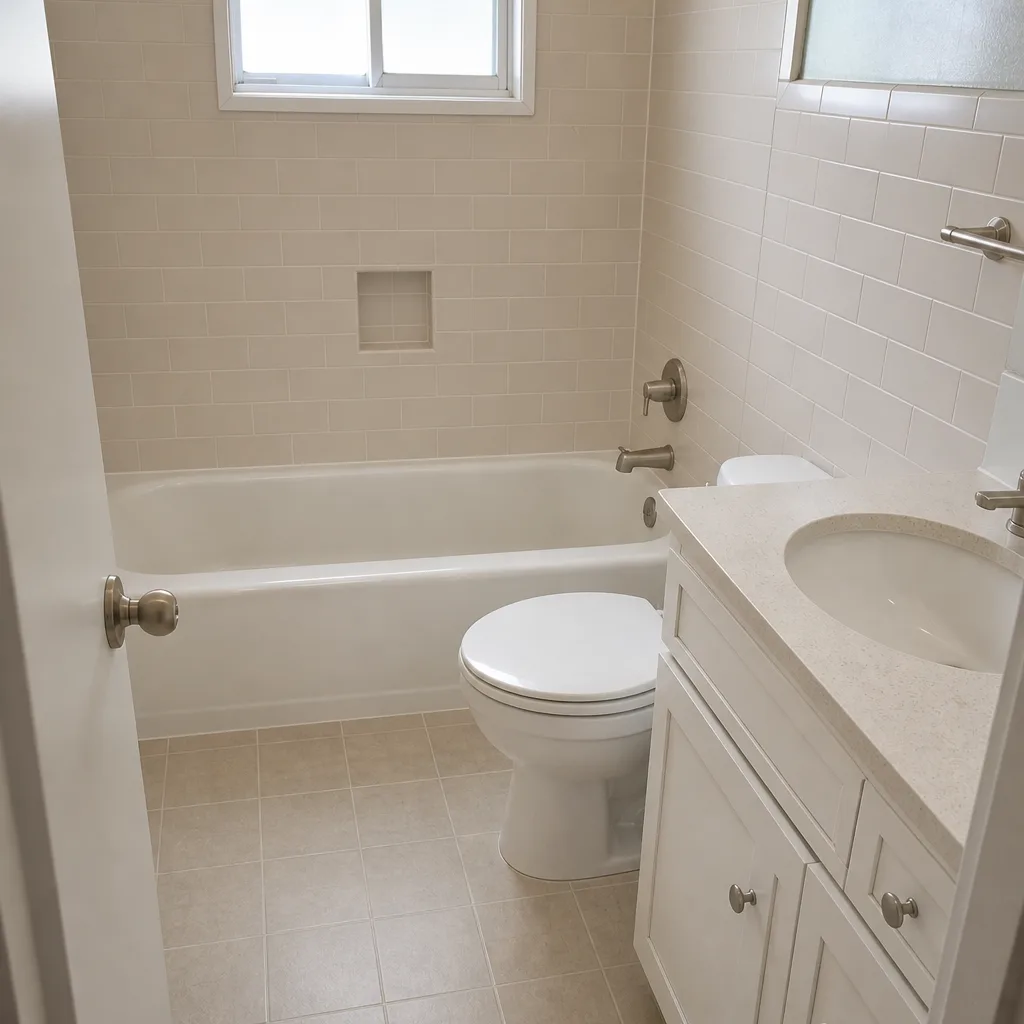
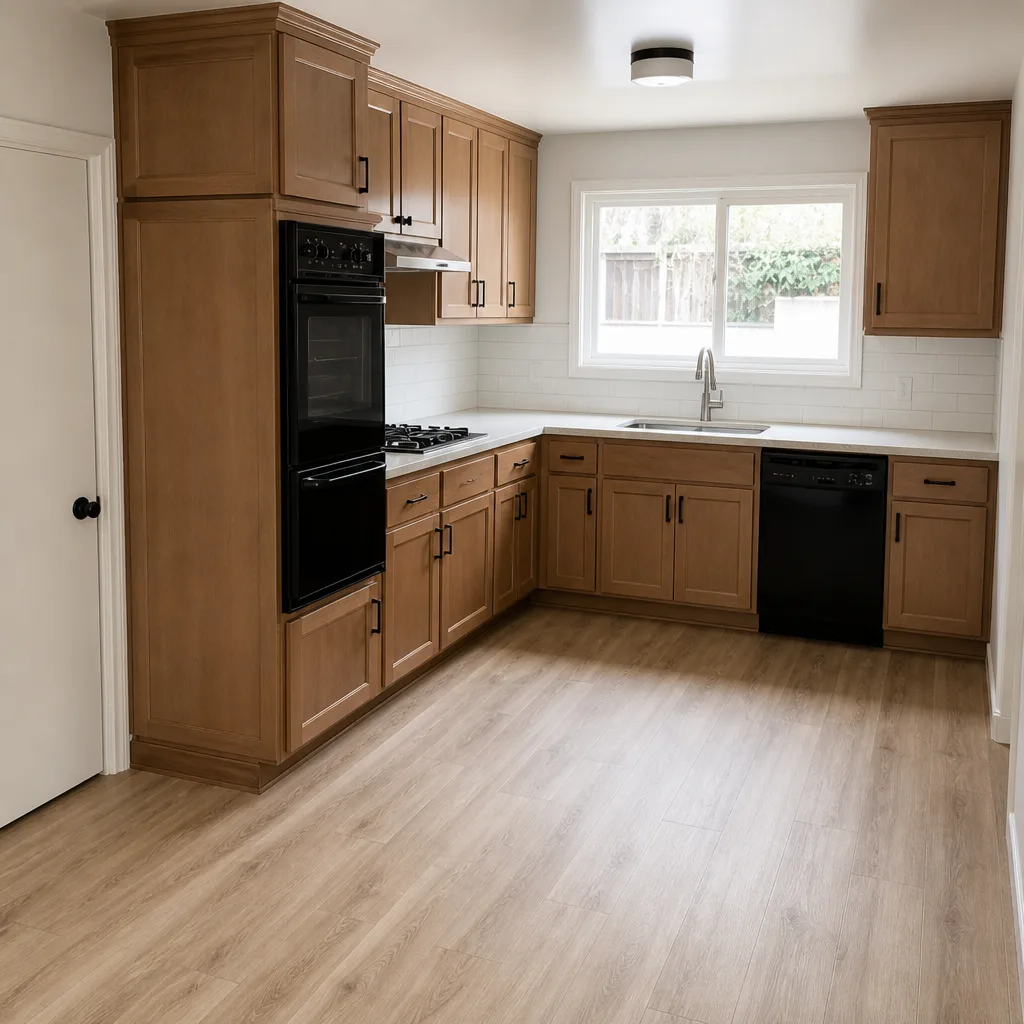
See the difference
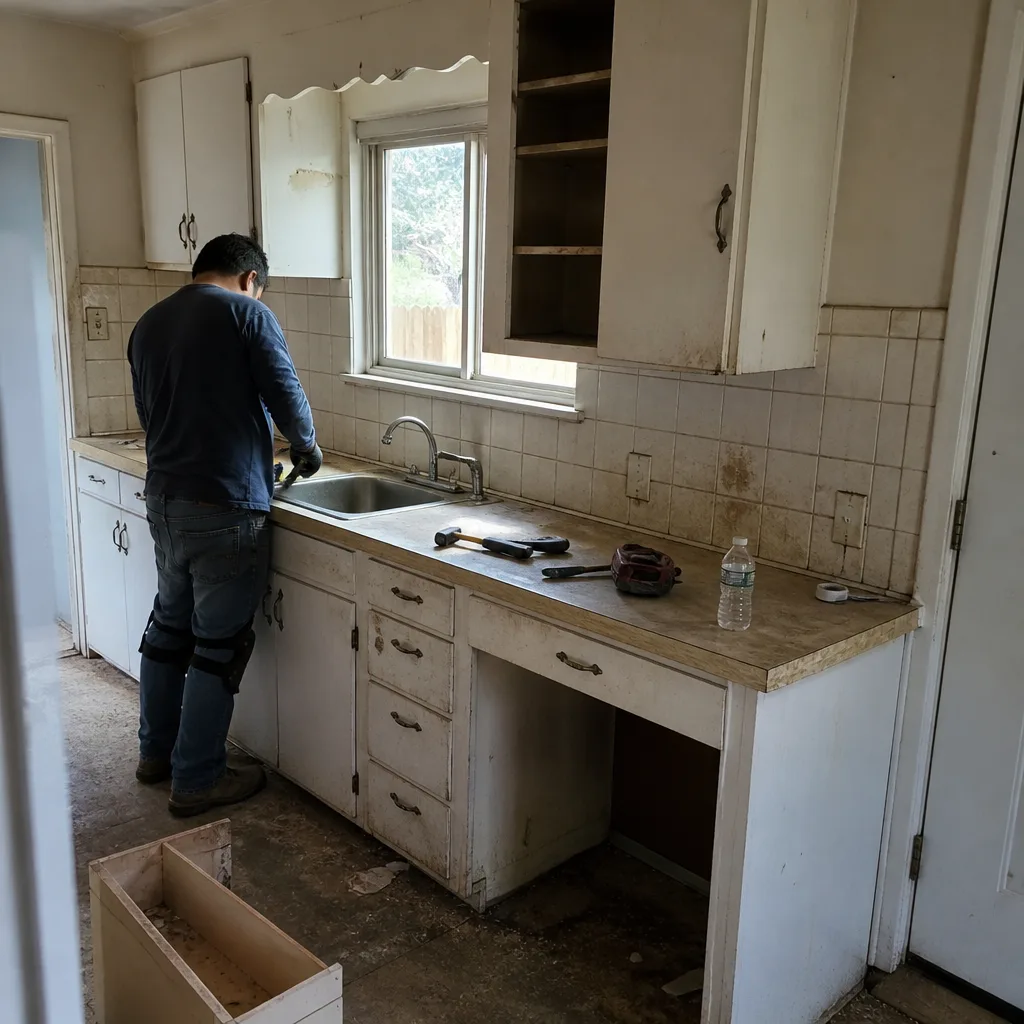 Before
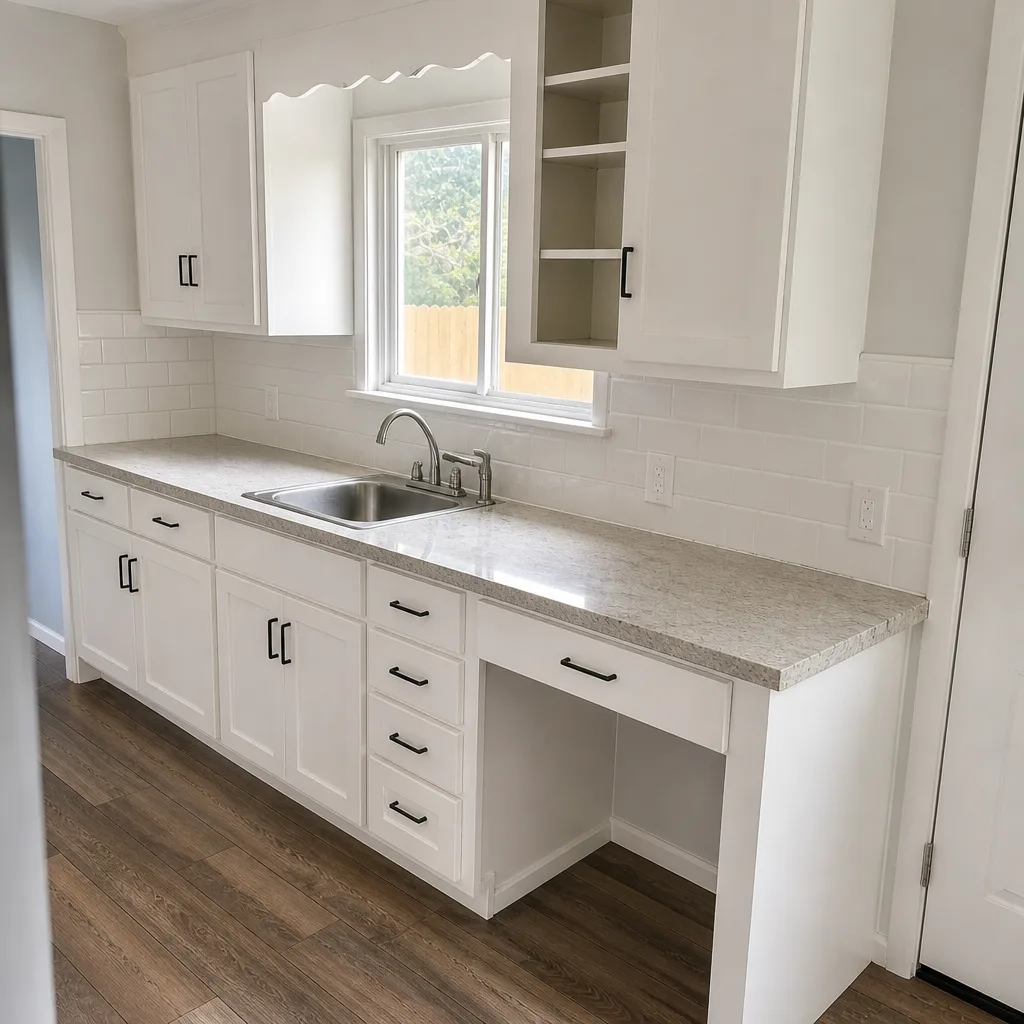 After
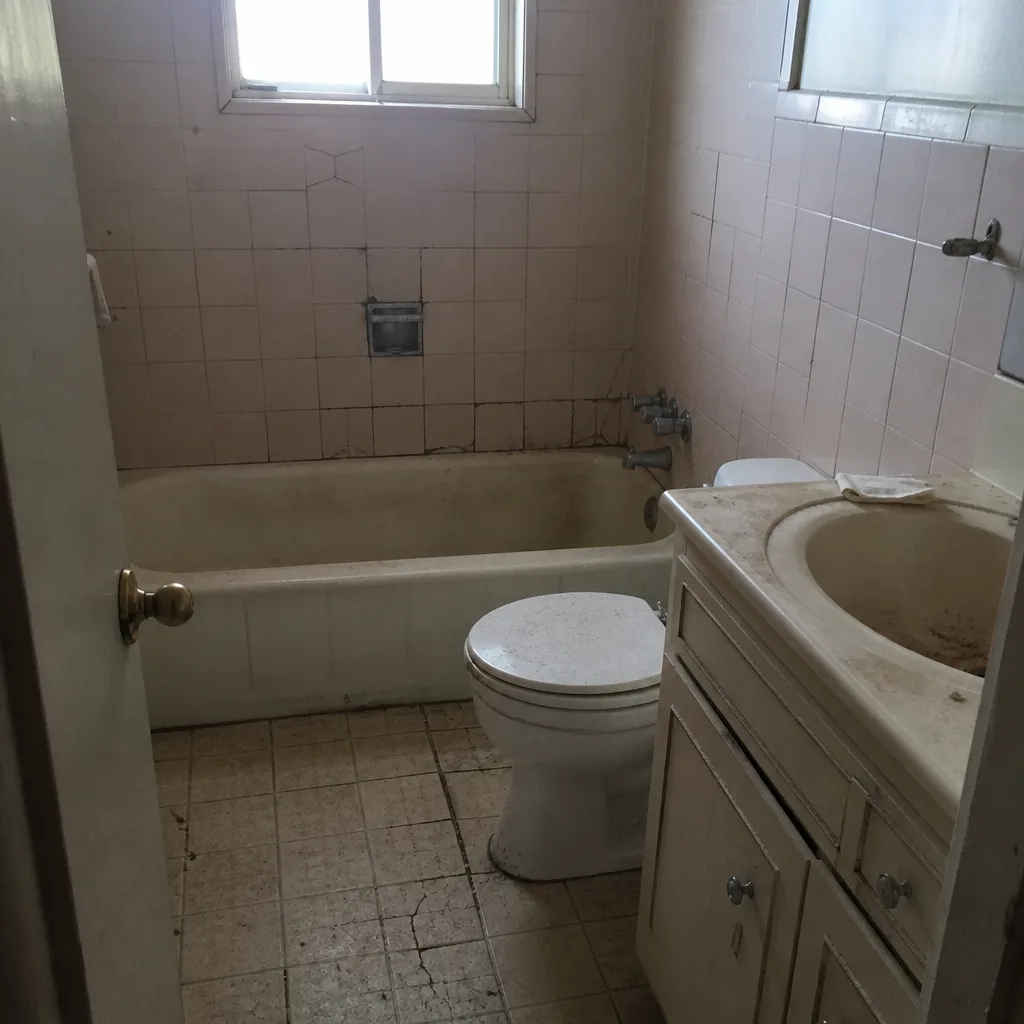 Before
 After
 Before
 After
When to Call a Professional
Some of this you can manage on your own – paint colors, hardware, which tile you prefer. But the moment your kitchen plan involves moving plumbing, gas, or electrical, moving a wall, or replacing cabinets and counters together, the sequencing complexity jumps and the risk of a blown timeline with it. A kitchen that’s waiting on a failed inspection or a back-ordered sink is a kitchen you can’t cook in, and clearing those bottlenecks late costs weeks. That’s the point to bring in a crew that runs the schedule as a discipline, not a guess. If you’re in Vallejo and the project involves real scope, Bradford Remodeling Co Vallejo offers free estimates in Vallejo – call (844) 560-4789 to get a written schedule and price before you commit.
Frequently Asked Questions
A kitchen remodel in Vallejo typically takes 6 to 10 weeks of active construction for a full project, with the full calendar timeline running 3 to 5 months once permit review and cabinet lead times are counted. A cosmetic-only refresh can finish in 2 to 3 weeks. Call (844) 560-4789 for an exact estimate tied to your scope.
Yes. Cabinets are the single biggest driver of kitchen timelines because everything after rough-in waits on them. A semi-custom line like KraftMaid or Wellborn commonly runs 6 to 10 weeks, and if that order goes in after demo instead of before it, the kitchen sits idle for a month. Order cabinets before demo starts to keep the schedule on track.
It shouldn’t if the price is written and the scope is documented. The legitimate exceptions are conditions that couldn’t be seen until demo – outdated plumbing, hidden wiring, or a structural surprise – which get documented and priced in writing before any corrective work starts. Bradford Remodeling Co Vallejo gives you a written price before any work begins, with no numbers that move at the door.
Yes. Any kitchen work that moves plumbing, gas, or electrical, or touches a wall, requires a permit and inspection in Vallejo. The permit filing date and the expected issuance window belong on your written schedule. We file the permit, coordinate the inspection, and build the inspection hold into the timeline as a real milestone.
No. A kitchen remodel is planned work, and anyone promising a same-day or same-week finish is either skipping scope or underestimating lead times. Even a cosmetic refresh needs a few weeks once counter fabrication and finish work are included. The honest answer is a realistic schedule based on your scope, not a promise of speed.
A real written schedule includes dated milestones – demo start, rough-in completion, inspection, drywall, cabinet delivery, cabinet install, countertop template and install, and the punch list – plus material order dates and lead times for every cabinet, counter, and fixture. It also names the waiting periods and a small buffer. Call (844) 560-4789 to talk through the schedule for your kitchen, free of charge.
The Bottom Line
Your kitchen’s timeline is set by the sequence – permits, cabinet lead times, inspection holds, and sub-trade scheduling – not by how fast a crew swings a hammer. A full remodel generally runs 6 to 10 weeks of construction, with 3 to 5 months of calendar time once the waiting periods are counted. Demand a written schedule with dated milestones, and demand a written price before any work begins. At job close, you should have a clean site, a documented scope, and a signed guarantee in your hand – the 365-Day Done Right Promise means if the work doesn’t hold within a full year, Bradford returns and corrects it at no charge. Our technicians have up to 22 years of experience, and a live person answers the phone 24/7. Call (844) 560-4789 for a free estimate in Vallejo.
Written by the team at Bradford Remodeling Co Vallejo.