Last updated November 17, 2026





Free written scope consultation - allowances, timeline, and change-order rules on paper before a single trade is scheduled
Kitchen Remodeling Maintenance Schedule: What to Do and When
Here’s the part nobody tells you at the walkthrough: a freshly remodeled kitchen asks for more maintenance than the dated one it replaced. Soft-close hinges drift out of alignment around the twelve-month mark. Quartz wants different care than the granite it replaced. A new ventilation hood has a filter schedule, and a refrigerator water line has a connection point that can quietly leak behind the cabinet. Skip the small adjustments and the expensive repair shows up at year three. In this guide, we lay out a by-component maintenance schedule for a kitchen in Vallejo, from the first month through year ten, so the money you just spent keeps holding its value.
Quick Answer
A newly remodeled kitchen needs a structured maintenance routine: a full hardware and seal check at 12 months, countertop care matched to material (quartz needs no sealing, granite every 12 to 18 months, butcher block every 30 to 60 days), caulk and grout inspection twice a year around the sink, backsplash, and floor transition, and annual service on the hood, dishwasher, and refrigerator water line. Log every task with a date and a photo. That record protects your appliance warranties, supports insurance claims, and gives future buyers a documented maintenance history.
Styles & brands we work with
- Kitchen remodeling
- Bathroom remodeling
- Home additions & ADU
- Roofing
- Windows & doors
- Driveway & pavers
- Fence
Table of Contents
- Why a Remodeled Kitchen Needs More Maintenance Than the Old One
- Cabinets and Drawers: The 12-Month Hardware Adjustment
- Countertop Care by Material: Quartz, Granite, and Butcher Block
- Caulk and Grout: The Water-Damage Entry Points
- Appliance Maintenance That Protects Your Warranties
- What You Can Do Yourself and What Requires a Licensed Tech
- Building a Maintenance Log That Works for Insurance and Disclosures
- Vallejo Climate and Kitchen Maintenance: What’s Different Here
Why a Remodeled Kitchen Needs More Maintenance Than the Old One
An older kitchen often limps along because it was built with fewer moving parts, fewer finish surfaces, and appliances that didn’t care how they were treated. A remodel resets the clock on all of it at once. The warranty on the cabinets covers defects, not neglect. The appliance warranty covers failure, not a filter you never changed. Those are two different things, and the gap between them is where homeowners lose money.
Think about what’s actually new after a kitchen remodel in Vallejo. New cabinet boxes with adjustable hinges and drawer slides. New countertops with a specific care routine. New caulk joints at the sink and backsplash that will shrink and crack within a couple of years. New plumbing under the sink. New ventilation ducting and a hood filter. New appliance seals and a water line that runs behind the cabinet run. Each of these has a service interval, and none of them come with a reminder on your phone.
The counterintuitive part is that a well-built kitchen needs more active maintenance early, not less. Those first 12 to 18 months are when hardware settles, caulk cures and pulls, and cabinet doors drift out of square. Catch those early and the kitchen stays tight for a decade. Ignore them, and you’re paying a tech to fix stripped hinges and water damage in year three.
If you’re planning a remodel and want the work done by a crew that hands you a written maintenance brief at completion, see our Kitchen Remodeling in Vallejo page. If you’re still deciding whether a full remodel is the right move, our General Contractor in Vallejo team can walk you through the scope before you commit to anything.
Cabinets and Drawers: The 12-Month Hardware Adjustment
Soft-close hinges and under-mount drawer slides are the most common upgrade in modern kitchens, and they are the most commonly neglected. Every time you open and close a door, the hinge arm moves a fraction of a millimeter. After a year of daily use, doors sit uneven, drawers drag at one corner, and the soft-close mechanism wears unevenly because the door is hanging out of square. That five-minute adjustment at 12 months saves a hinge replacement at year three.
Here’s the schedule we recommend at close-out on a Bradford project:
- Month 3: Check every cabinet door for square. Look for a gap that’s wider at the top of one door than the bottom of the next. Adjust the hinge with a screwdriver (most brands, including KraftMaid and Wellborn, use a three-way adjustable European hinge).
- Month 6: Adjust drawer slides on any drawer that drags. Clean the tracks with a dry cloth. Do not oil the slides; most soft-close hardware is designed to run dry.
- Month 12: Full hardware pass. Every door and drawer gets checked, hinges adjusted, and screws snugged. Wipe down the cabinet faces with a damp cloth and mild dish soap.
- Every 12 months after: Repeat the full pass. Add a thin coat of cabinet wax or a manufacturer-approved polish to painted or stained faces once a year.
One local note: Vallejo’s humid stretches near the waterfront and the Mare Island strait can swell wood cabinet doors slightly in winter, which is exactly when you’ll notice a door that suddenly rubs. That’s not a defect. Wake a few weeks and it settles. Adjust, don’t force. If a hinge feels loose or the door won’t sit flush after a proper adjustment, that’s a call to us before it loosens further.
Wipe up spills inside cabinets quickly, especially under the sink. The cabinet floor there is the first place water damage shows, and it’s the last place anyone looks.
Countertop Care by Material: Quartz, Granite, and Butcher Block
Every countertop material has its own maintenance routine, and skipping the wrong one has consequences. We install Cambria and Caesarstone quartz, natural granite, and butcher block regularly, and each asks for something different.
Quartz (Cambria, Caesarstone)
- Sealing: Never. Quartz is non-porous by design.
- Daily: Wipe with a damp cloth and mild soap. Avoid abrasive pads and scouring powder.
- Watch out for: Heat. Always use a trivet under a hot pan. Quartz resin can discolor from direct heat.
- Watch out for: Citrus and vinegar. Prolonged contact can dull the finish. Wipe up quickly.
- Annual: A once-a-year polish with a quartz-safe cleaner keeps the finish even.
Granite
- Sealing: Every 12 to 18 months. Test by dropping a few drops of water on the surface; if the water soaks in within 15 minutes, it’s time to reseal.
- Daily: Mild soap and water. Avoid acidic cleaners, which etch the stone over time.
- Annual: Reseal with an impregnating sealer. This is a homeowner-friendly job.
- Watch out for: Oil and wine stains. Granite is porous, and a stain that sits can require a poultice to lift.
Butcher Block
- Oiling: Every 30 to 60 days with food-grade mineral oil. Never use vegetable or olive oil; they go rancid.
- Weekly: Wipe with a lightly damp cloth and dry immediately. Never soak or leave standing water.
- Monthly: Light sanding on any raised grain, then re-oil.
- Watch out for: Cross-contamination. Raw meat should be prepped on a separate board, not directly on the block.
The most common mistake we see in Vallejo kitchens is treating quartz like granite and sealing it. That does nothing but create a film. Read the tag that came with your slab, and if it isn’t there, call us and we’ll tell you what was specified. Our Bradford Remodeling Co Vallejo home page lists the surface brands we install, which helps when you’re tracking manufacturer care instructions.
Caulk and Grout: The Water-Damage Entry Points
This is the section that saves the most money. In any remodeled kitchen, the three most common entry points for water damage are the caulk joint around the sink, the caulk line where the backsplash meets the counter, and the floor transition at the base of the cabinets. All three are small, all three are cheap to maintain, and all three are expensive to fix once water gets behind them.
Twice a year, in spring and fall, do a five-minute walk-through of every caulk and grout line:
- Look: Run a finger along the caulk at the sink, backsplash, and floor transition. If any section is cracked, peeling, or separating from the surface, that’s a failure point.
- Press: Press the caulk gently. If it feels soft or pulls away, moisture is likely already getting in.
- Dry: If you catch a small gap early, dry the area with a hair dryer on low, then re-caulk with a kitchen-rated silicone or siliconized acrylic. Match the color to what’s already there.
- Grout: On tiled backsplashes, check grout lines for cracks and pinholes. Regrout small areas or apply a grout sealer once a year.
Behind the sink is the highest-risk spot. If your sink has a dishwasher drain connection or a garbage disposal, the plumbing joint under the counter also gets a visual check each season. Vallejo’s older housing stock sometimes has sinks mounted to a cabinet run with older plumbing behind, and a slow drip behind the cabinet box gives no warning until the cabinet floor softens.
We also see the floor transition fail on new installs because the flooring contractor and the cabinet installer met at a joint that was never mopped up. If your remodel left a silicone bead at the toe kick, keep it clean and check it every time you mop. Water pooling there softens the cabinet base before you notice anything wrong. For remodels where the kitchen and bath share plumbing, our Bathroom Remodeling in Vallejo team sees the same failure points on a different schedule.
Appliance Maintenance That Protects Your Warranties
Appliance warranties cover manufacturing defects, not deferred maintenance. A dishwasher that fails because the filter was never cleaned is a warranty claim the manufacturer can decline. There’s a simple routine that keeps you on the right side of that line:
- Ventilation hood: Clean or replace the filter every 1 to 3 months, depending on how much you cook. Degreased filters keep the motor pulling properly and reduce grease buildup on the cabinet faces above the range.
- Dishwasher: Clean the filter every month and run a cleaning cycle every 6 months. Check the door gasket for food debris; a dirty gasket is the leading cause of leaks and door alignment issues.
- Refrigerator water line: Inspect the water line connection every 6 months. Check for dampness at the supply valve and behind the fridge. A slow leak behind the cabinet run is invisible until it isn’t.
- Range and cooktop: Wipe the cooktop after every use. For gas ranges, the surface burners get a deep clean every 6 months; leave the gas connection itself to a licensed tech (see the section below).
- Faucet and sink: Check the aerator every 6 months for mineral buildup. Vallejo’s water runs moderately hard in parts of town, so a vinegar soak every 6 to 12 months keeps flow consistent. Faucet cartridges from Kohler and Moen are replaceable; a slow drip usually means a worn cartridge, not a failed fixture.
Log each of these with a date in your maintenance record. If you ever need to file an appliance warranty claim, a clean record with dated entries is the difference between a repair and a denial.
What You Can Do Yourself and What Requires a Licensed Tech
There’s a clear line between tasks a homeowner can learn in a week and tasks that need a licensed professional. Crossing that line on gas work isn’t just risky; in many cases it voids the appliance warranty and creates a code problem that can complicate any future inspection or sale.
Homeowner-safe maintenance
- Adjusting cabinet hinges and drawer slides
- Cleaning the ventilation filter and dishwasher filter
- Re-sealing granite and oiling butcher block
- Re-caulking small gaps at the sink and backsplash
- Wiping down cabinet faces and appliance exteriors
- Checking the refrigerator water line for dampness (visual check only)
Requires a licensed professional
- Any gas range or cooktop connection. Adjusting or reconnecting a gas fitting requires a licensed tech. A small leak has no smell you can trust and no safe DIY fix.
- Dishwasher electrical or plumbing reconnection. If the unit moves or the supply line needs service, that’s a plumber or a licensed appliance tech.
- Refrigerator water line replacement. A visual check is fine; replacing the supply line or valve is a plumber’s job.
- Hood ducting changes. Any modification to the exhaust ductwork affects venting and fire safety.
- Electrical outlet or switch work near the counter. Kitchen circuits are on GFCI protection for a reason; a licensed electrician handles any changes.
We flag this in every kitchen handover because it matters. If you ever smell gas, leave the house and call your gas utility or the fire department first, then call a licensed plumber. Do not tighten a fitting to “see if it stops.” The 365-Day Done Right Promise covers the work we did; it does not cover a homeowner modification on a gas connection, and we will tell you that plainly when it happens.
Building a Maintenance Log That Works for Insurance and Disclosures
A good maintenance log is one of the most valuable documents you can keep for a kitchen. It protects you on insurance claims and it’s a genuine selling advantage when you list the house. Buyers pay for documented care, because it tells them the kitchen wasn’t left to fail quietly.
Here’s what to log, and how:
- Create a single folder. A physical binder or a cloud folder. Both work. What matters is that everything lands in one place.
- Record the manufacturer and model number of every appliance, faucet, and surface. Include the spec sheet that came with it. If you had a kitchen done by us, you already have these; the brands include Kohler, Moen, Cambria, and KraftMaid, and every manufacturer spec sheet carries the care and warranty terms.
- Log each task with a date. “Cleaned hood filter, 3/14/26.” “Re-caulked sink perimeter, 4/2/26.” Two lines per task is enough.
- Photograph anything you fix. A dated phone photo of a re-caulked joint or a resealed countertop is worth more than a written note if there’s ever a dispute.
- Keep the written guarantee in the folder. The 365-Day Done Right Promise paperwork belongs in the same folder as your appliance manuals.
- Review the log once a year. Add any service you had done by a pro, including the invoice.
For an insurance claim after a leak, your adjuster will ask when the issue started and what maintenance was done. A dated log answers both questions immediately. For a future buyer disclosure, the same log shows a well-maintained kitchen, which is a different conversation than a pile of receipts.
Vallejo Climate and Kitchen Maintenance: What’s Different Here
Vallejo sits between the strait and the hills, and that geography shows up in kitchen maintenance in ways that a generic national guide won’t tell you. Winter humidity is higher than inland, summer is cooler than most of the Bay Area, and the swing between the two moves wood and caulk more than homeowners expect.
- Winter humidity: Wood cabinet doors and butcher block swell slightly during wet months. Door adjustments and butcher-block oiling are best scheduled in late fall before the wet season, not after.
- Summer fog belt: Homes near the waterfront see cooler summers and more condensation on windows and hood surfaces. Run the ventilation hood during cooking, even on cool days, to move moisture out.
- Hard water: Parts of Vallejo run moderately hard. Faucet aerators and coffee equipment benefit from a descaling soak every 6 months.
- Older housing stock: Many Vallejo kitchens were built decades ago and remodeled onto older plumbing and electrical. When you’re updating a kitchen in an older home, the maintenance log should include the age of any plumbing behind the sink cabinet.
- Seismic reality: Any heavy countertop work or hood installation should have been anchored to spec. If you didn’t see the anchoring during the install, ask. We document the anchoring on every kitchen we hand over.
This is where experience matters. Our technicians have up to 22 years of experience, and the ones who’ve spent that time in Vallejo know which neighborhoods see the most wood movement and which countertops need the most attention.
Common Mistakes to Avoid
- Skipping the 12-month hardware adjustment. Most homeowners do. The fix at year three costs more than the five-minute adjustment would have, and the warranty usually won’t cover wear from neglect.
- Sealing quartz. Quartz does not need sealing. Applying sealer to Cambria or Caesarstone leaves a film that dulls the finish. Read the spec sheet.
- Letting caulk around the sink go past a hairline crack. Vallejo’s wet winters push water through gaps that would stay dry inland. Replace caulk at the first sign of separation, not after a leak.
- Cleaning a dishwasher filter with soap only. The filter needs water and a soft brush, then a cleaning cycle every 6 months. Soap buildup can actually make the filter less effective.
- Adjusting a gas range connection yourself. This requires a licensed tech. A gas fit is a safety and legal item, not a homeowner task.
- Not keeping a maintenance log. Without dates and photos, an insurance adjuster or a buyer is working with no evidence. The log is the easiest part of maintenance and the most valuable.
- Oiling butcher block with cooking oil. Vegetable and olive oil go rancid. Use food-grade mineral oil, and reapply every 30 to 60 days.
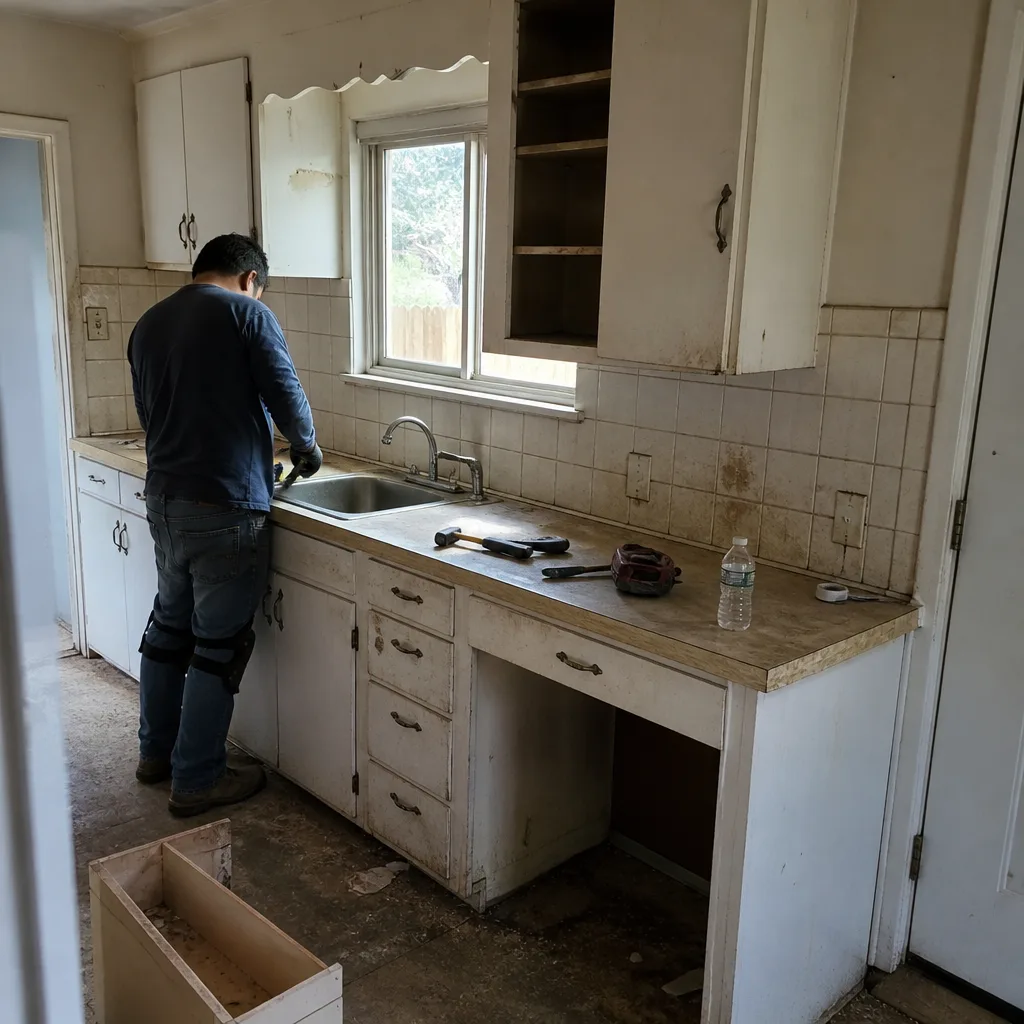
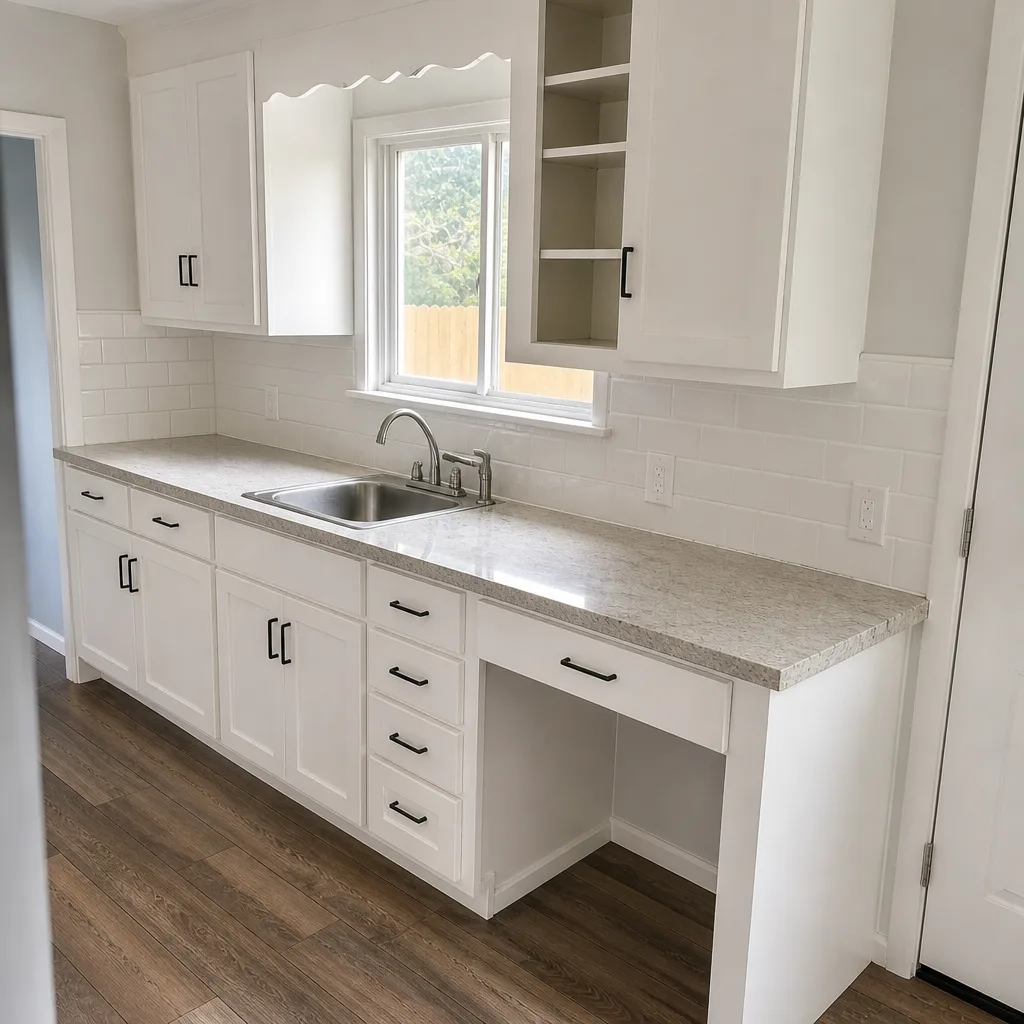
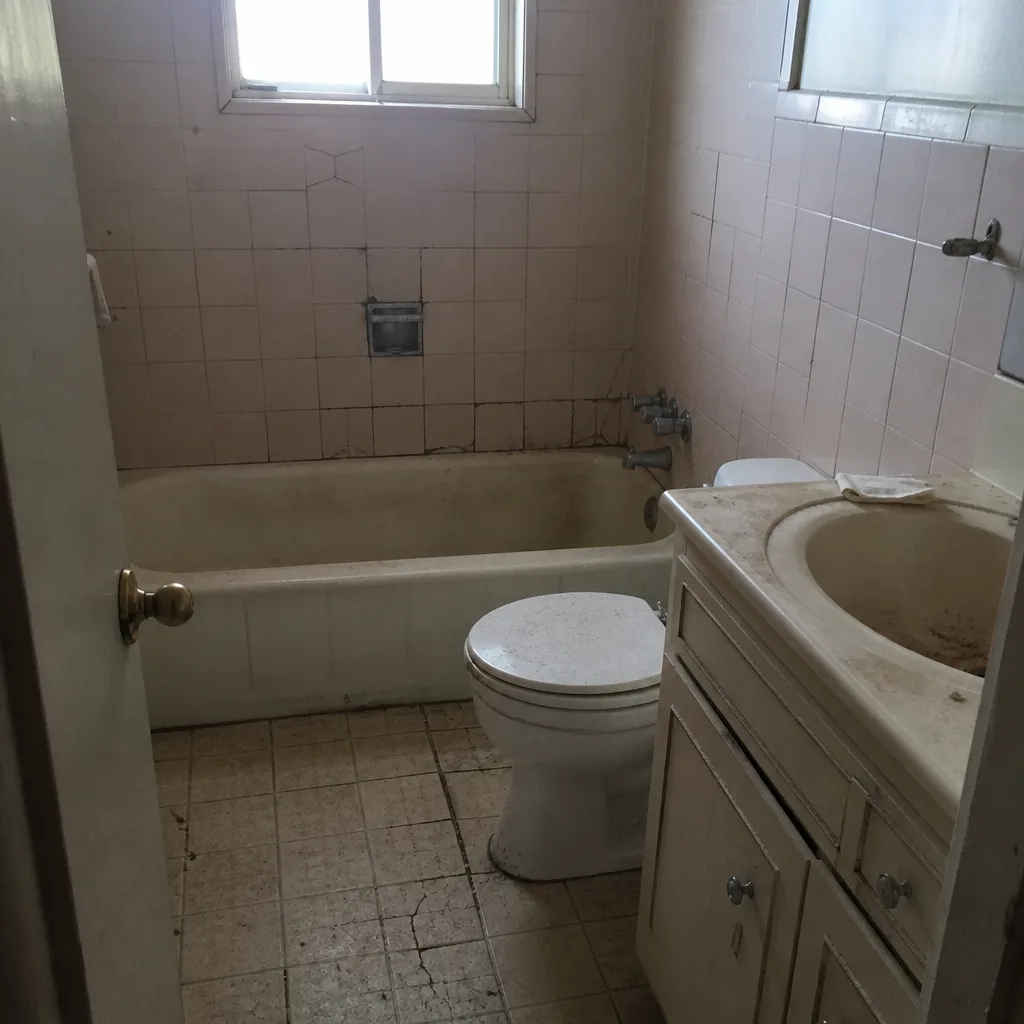
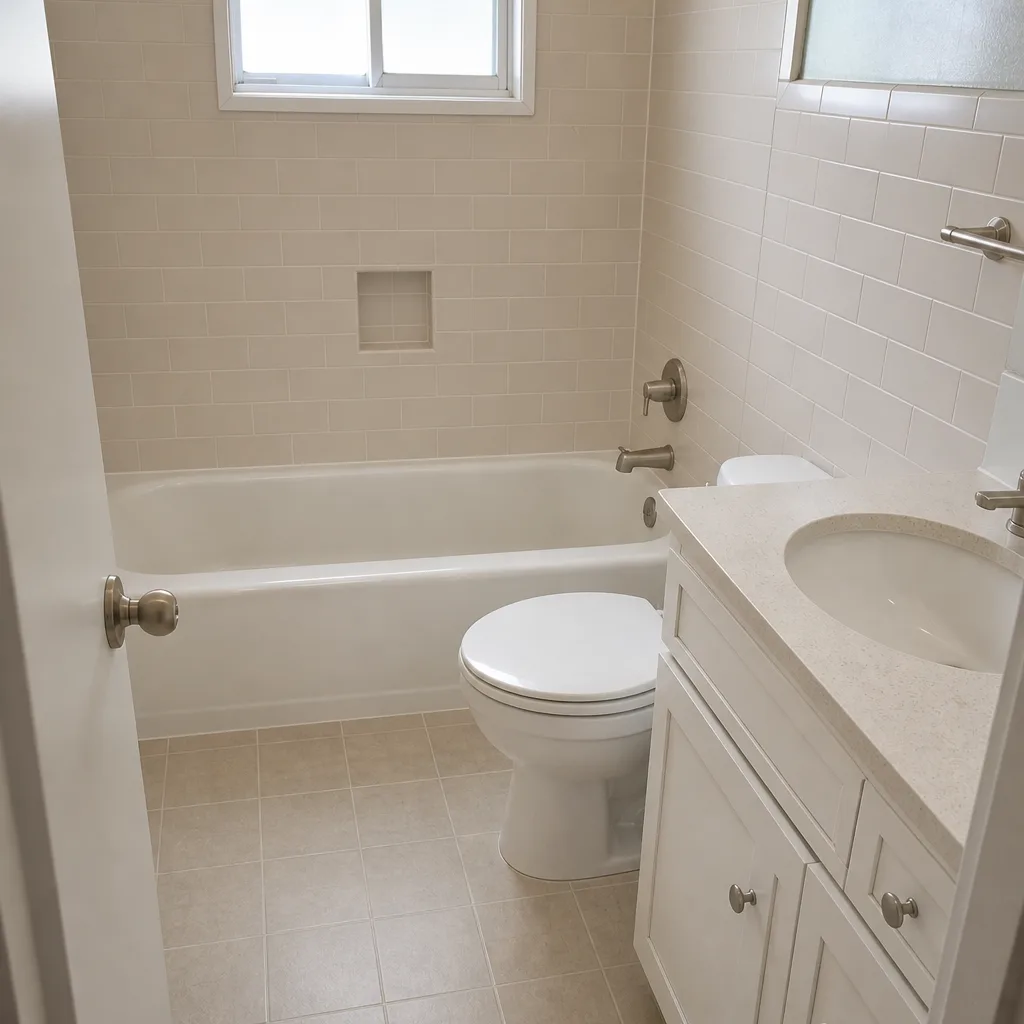
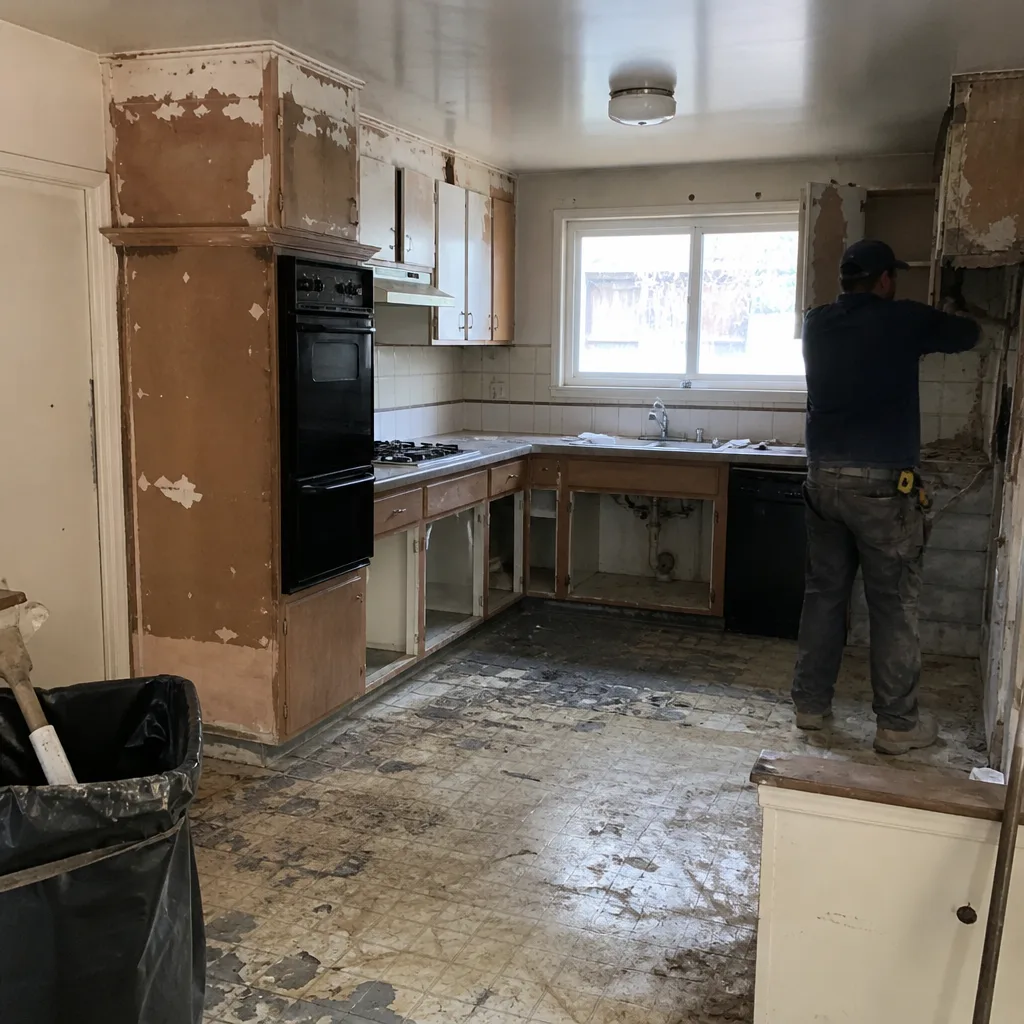
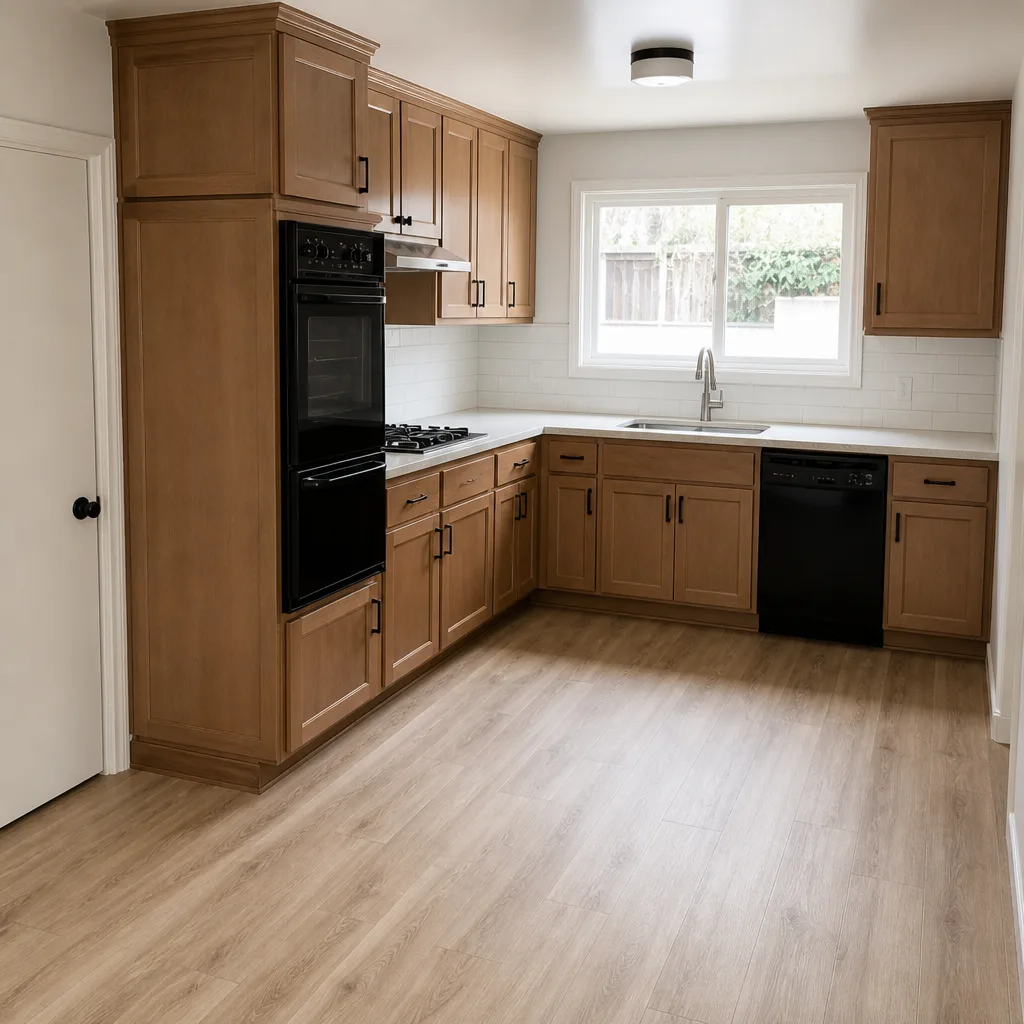
See the difference
 Before
 After
 Before
 After
 Before
 After
When to Call a Professional
Most of this schedule is homeowner work. A few items aren’t. Call a licensed pro if you find moisture or softness behind the sink cabinet, if caulk keeps failing after multiple replacements, if a gas smell or connection is involved, or if a cabinet hinge won’t hold after a proper adjustment. Those are the signs that something has failed below the surface, and small fixes make them worse. Bradford Remodeling Co Vallejo offers free estimates in Vallejo. Call (844) 560-4789 and we’ll look at it, give you a written number, and tell you whether the fix is minor or whether the promise covers it. Every project we finish carries the 365-Day Done Right Promise: if the work fails within the guarantee period, we come back and correct it at no charge.
Frequently Asked Questions

Adjust cabinet hinges at month 3, month 6, and month 12, then once a year after that. Soft-close European hinges from brands like KraftMaid and Wellborn use a three-way adjustable arm that drifts slightly with daily use. The month 12 adjustment is the one most homeowners skip, and it’s the one that prevents an expensive hinge replacement at year three. Call (844) 560-4789 for a free estimate if you want a professional to check the hardware as part of a larger kitchen service call.
No. Quartz surfaces, including Cambria and Caesarstone, are non-porous and never need sealing. Applying sealer to quartz does nothing useful and can leave a dull film on the finish. Granite, which is porous, does need sealing every 12 to 18 months, and butcher block needs mineral oil every 30 to 60 days.
Look for soft or discolored cabinet flooring under the sink, bubbling paint or caulk, and a musty smell that doesn’t go away after cleaning. Vallejo’s wet winters make caulk failures common around the sink and backsplash, so check both every spring and fall. If you find softness in the cabinet box, call a professional before it spreads; the repair is far cheaper when caught in the first month. Call (844) 560-4789 for a free estimate.
No. Any adjustment or reconnection of a gas range or cooktop must be done by a licensed technician. This is as much a legal requirement as a safety one, and a DIY gas fix can void the appliance warranty and complicate a future inspection. If you smell gas, leave the house and call your gas utility or fire department first.
Keep a single maintenance log with dates, photos, appliance model and spec sheets, professional service invoices, and the written guarantee for the original remodel. That record supports insurance claims after a leak and serves as documentation for future buyer disclosures. The 365-Day Done Right Promise paperwork belongs in the same folder as your manufacturer care sheets.
In late fall, before the wet season, check every caulk and grout line at the sink, backsplash, and floor transition, oil the butcher block, adjust cabinet hinges, and clean the ventilation hood filter. Wood cabinet doors and countertops swell with winter humidity, and a pre-season check catches failures while they’re still cheap to fix. Call (844) 560-4789 for a free estimate if you’d rather have the pre-season check done by a professional.
The Bottom Line
A remodeled kitchen is a bigger investment than the one it replaced, and it asks for more maintenance. The core routine is simple: cabinet hardware check at 3, 6, and 12 months, countertop care matched to material, caulk and grout inspection twice a year, appliance and water-line service on a schedule, licensed techs for anything involving gas or reconnection, and a dated maintenance log that protects both your insurance and your resale. Do those, and the kitchen holds for a decade or more. Bradford Remodeling Co Vallejo installs every project with the same schedule in writing at handover, and every completed project carries the 365-Day Done Right Promise. Call (844) 560-4789 for a free estimate.
Written by the team at Bradford Remodeling Co Vallejo.