Last updated November 17, 2026






Free written scope consultation - allowances, timeline, and change-order rules on paper before a single trade is scheduled
Kitchen Remodeling Warning Signs Every Homeowner Should Know
The most expensive kitchen remodel mistake in Vallejo doesn’t happen on the job site. It happens at the kitchen table, the moment a homeowner signs a contract with a single lump-sum price, no line-item scope, and a vague sentence promising “satisfaction guaranteed.” We’ve watched homeowners recover from bad demolition, but recovering from a bad contract is slower and costs more. The signs that a remodel is heading off the rails almost always show up in the paperwork before anyone swings a hammer. This guide walks through the red flags in the contract, the crew’s behavior on day one, the permit conversation, and how to document problems if you ever need to escalate. Read it before you sign anything.
Quick Answer
The clearest warning signs of a bad kitchen remodeling contractor show up before work starts: a lump-sum bid with no scope breakdown, verbal-only change order promises, a payment schedule front-loaded toward the contractor, reluctance to pull permits, and no written guarantee. If a contractor won’t put the scope, the price, and the guarantee in writing, that’s your answer. Walk away.
Styles & brands we work with
- Kitchen remodeling
- Bathroom remodeling
- Home additions & ADU
- Roofing
- Windows & doors
- Driveway & pavers
- Fence
Table of Contents
- Contract Red Flags: What the Paperwork Reveals
- Payment Schedule Warning Signs
- On-Site Behavioral Red Flags
- Permit Red Flags: “Just a Cosmetic Remodel”
- Slow Contractor vs. Abandoned Job: When to Escalate
- How to Document Warning Signs Properly
- Common Mistakes to Avoid
- Frequently Asked Questions
Contract Red Flags: What the Paperwork Reveals
A kitchen remodel contract is a scope document, a price document, and a guarantee document, all in one. If any of those three are missing or vague, the contract is a liability, not protection. In our experience across Vallejo, the same four problems keep showing up in the contracts homeowners bring to us after a bad experience elsewhere.
Lump-sum bids with no scope breakdown. A single number with no line items tells you nothing about what’s included. Does the price cover demolition and haul-away? Cabinet removal? Subfloor repair? Electrical rough-in? You can’t compare two lump-sum bids against each other, and you can’t prove what was promised when the contractor starts adding charges. A real scope lists materials by name and brand, quantities, and labor by phase.
Verbal-only change order promises. “If something comes up, we’ll just work it out.” That phrase is how surprise invoices happen. Every change should be written, priced, and signed before the work proceeds. No exceptions.
Missing guarantee language. “Satisfaction guaranteed” is not a guarantee. Ask these questions:
- How long does the guarantee last? A year is a real number.
- What does it cover? Workmanship? Materials? Both?
- What happens if the work fails? Does the contractor return at no charge?
- Is the guarantee in writing, in the contract, in language you can read?
No start date and no completion estimate. A contract without a start date and a written milestone schedule gives the contractor permission to run your project behind three others for six months. Get the dates in writing.
At Bradford Remodeling, our Vallejo home remodeling team writes every scope line by line, names the brands (KraftMaid and Wellborn cabinetry, Cambria and Caesarstone surfaces, Kohler and Moen fixtures), and puts the 365-Day Done Right Promise in writing before a single tool comes out. If the work fails inside that window, we come back and correct it at no charge. That clause is in the contract, not in a brochure.
Payment Schedule Warning Signs
Payment is the single most predictive signal in the whole contract. A fair schedule follows the work. A dangerous one puts the contractor ahead of the job from day one.
Here’s what a disciplined schedule looks like, based on how we structure payments:
- A modest deposit to schedule and order materials. Enough to lock in cabinets and fixtures, not enough to fund the contractor’s overhead for months.
- Progress payments tied to completed phases. Demo complete. Rough-in inspected. Cabinets set. Countertops installed. Each payment comes after the milestone, not before.
- A final payment held until punch-list close. The last draw releases only when the job is squared away: clean site, documented scope, signed guarantee in your hand.
Red flags in the payment section:
- More than a third of the total due at signing. When the front-loaded payment is doing the contractor’s cash flow work, you’re funding somebody else’s project with your kitchen money.
- Payment requested for “materials coming.” On order, maybe. On delivery, yes. “Coming” is not a milestone.
- Cash only, no receipts. Every payment should generate a written, numbered receipt.
- No retainage. A contractor who won’t hold any money back for close has no financial incentive to finish cleanly.
If the payment schedule doesn’t tie to the milestones in the scope, that’s not a payment plan. That’s a loan you didn’t agree to make.
On-Site Behavioral Red Flags
Day one tells you almost everything. Before a single cabinet comes down, you should see a crew that treats the site like a documented job, not a personal project. These are the signals we’ve learned to read from the homeowner’s side of the conversation.
No site protection plan. Floors covered. Doorways masked. Kitchen sealed off from the rest of the house with plastic sheeting and zip walls. Ductwork covered so dust doesn’t migrate through the whole house. If a crew shows up with a wheelbarrow and no protection, the cleanup bill is coming out of your patience, not their bid.
No dumpster or debris staging area. Demo produces cubic yards of debris fast. A crew without a plan for haul-away is a crew planning to rathole debris in your garage or on the side yard “temporarily.” Ask where the dumpster goes before the job starts.
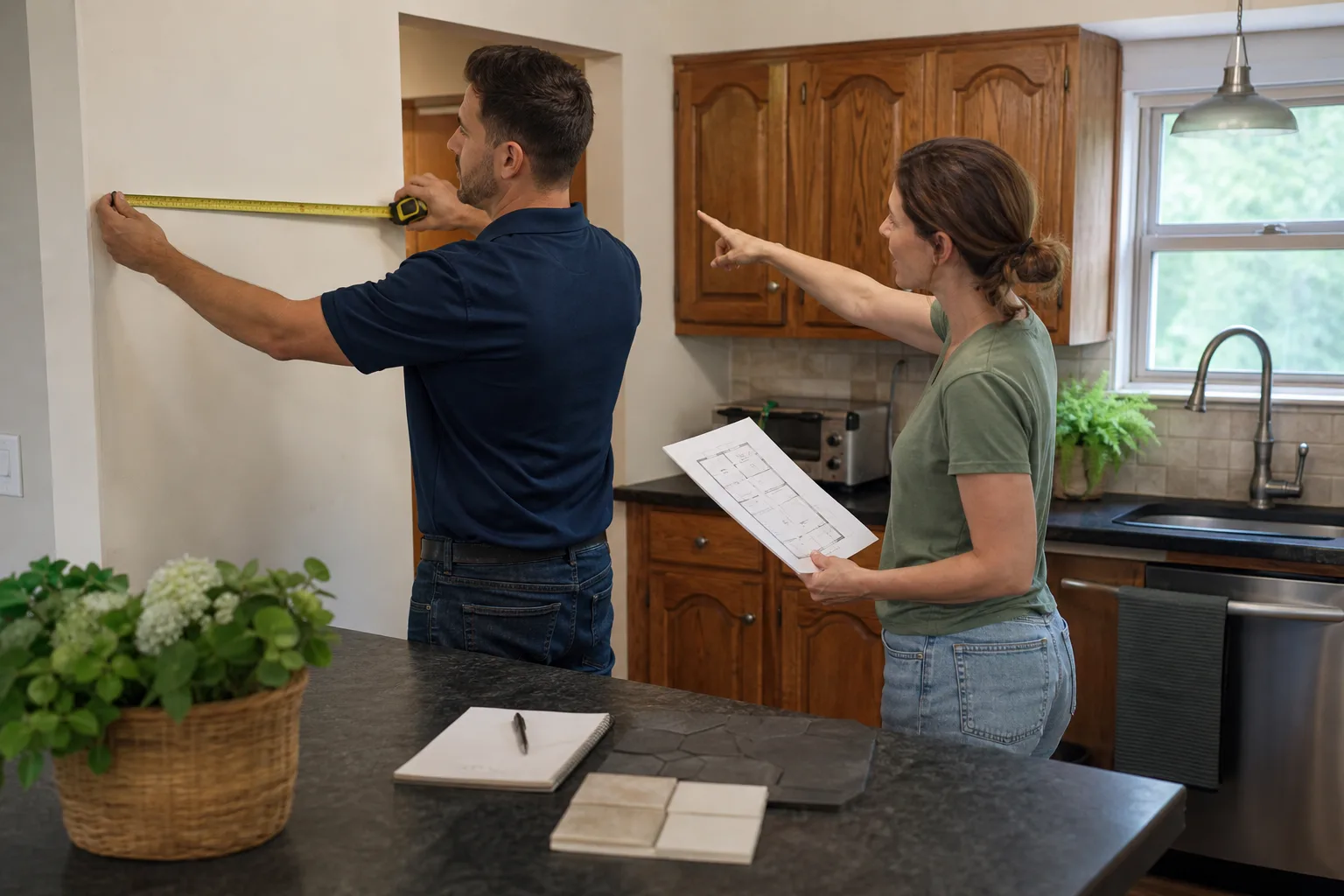
Skipping the pre-demo walkthrough. A disciplined crew walks the kitchen with you before demolition: what’s staying, what’s going, what’s getting salvaged, where the shutoffs are, which outlets are live. Skipping that walk is how surprise damage happens and how the blame game starts.
Unknown faces. Background-checked, uniformed technicians on every job means you know who’s coming in. If a rotating cast of unfamiliar faces shows up and the crew chief can’t tell you who they are, ask.
No communication rhythm. A daily or weekly check-in should be scheduled in writing. Silence is not “hard at work.” Silence is data.
When we send our team into Vallejo homes, identity and conduct standards are set at the Garrison Partners level, not left to individual job sites. Everyone on your job is background-checked and uniformed before the crew arrives. That’s not decoration. It’s the difference between a job you supervise and a job you can leave alone.
Permit Red Flags: “Just a Cosmetic Remodel”
Permits are where a lot of kitchen remodels go sideways quietly. The work looks fine for six months, then a home inspection or a resale turns up unpermitted electrical, plumbing, or structural work, and the cost to make it legal lands on you.
Vallejo’s building department, like most in Solano County, requires permits for most of what a real kitchen remodel touches: new circuits, moving plumbing fixtures, relocating gas lines, wall removal, and any structural changes. Cosmetic-only work, like repainting cabinets or swapping a faucet, usually doesn’t need a permit. The line between “cosmetic” and “permit-required” is narrower than a lot of contractors pretend.
Red flags in the permit conversation:
- Discouraging you from pulling permits. “It’s going to slow down the job” or “we’ll save you money” is a benefit to the contractor and a liability to you.
- Suggesting “we’ll just call it cosmetic” on work that requires inspections. This is a red flag that says the contractor is either unlicensed for the scope or unwilling to have his work inspected.
- No permit number in the contract. A permitted job has a paper trail. If nobody shows you a permit, there probably isn’t one.
- Inspections never scheduled. Permits are worthless if the rough-in and final inspections are never called. Ask for the inspection sign-off before final payment.
Our general contractor team in Vallejo pulls permits and passes inspections as part of the standard scope. It’s not an add-on. It’s part of what “squared away” means at close.
Slow Contractor vs. Abandoned Job: When to Escalate
Knowing when to escalate is one of the hardest calls a homeowner makes. Every kitchen remodel has slow weeks. Very few are actually abandoned. The distinction comes down to documented, written commitments versus silence.
Signs of a slow-but-working contractor:
- Advances the scope, just behind schedule.
- Answers calls and texts within a reasonable window.
- Explains delays with a specific reason (material backorder, inspection scheduling, weather).
- Shows up on the job at least a few times a week.
- Discloses the delay in writing when asked.
Signs of an abandoned job:
- No crew on site for two or more consecutive weeks without notice.
- Unanswered calls, unanswered texts, unanswered email for five business days or more.
- Changed phone number, moved address, or you’re told “we’re restructuring.”
- Requests for additional payment before any additional work advances.
- Other homeowners in the same situation coming forward.
When a job crosses into the second category, escalate in writing and escalate fast:
- Send a written notice of non-performance by certified mail and email. State the specific contractual obligation missed, the date it was due, and a realistic cure date (typically 10 business days).
- Document every attempt. Keep a log of calls, texts, and emails with timestamps.
- Photograph the site as it stands. Date-stamped photos of the wall that hasn’t moved in three weeks are evidence.
- Consult the California Contractors State License Board (CSLB) if the contractor’s license is at risk of being tied to a pattern of non-performance. A CSLB complaint is a formal step and creates its own record.
If a contractor’s being slow, ask for a written recovery schedule. If they won’t give you one, that’s data. If they refuse to put any recovery schedule in writing, that’s your answer.
How to Document Warning Signs Properly
If you ever need to pursue a CSLB complaint or a small claims case, the paper trail matters more than your memory. Losing in small claims almost always means losing on documentation, not losing on the facts.
Build a file from day one, even during a good job. If problems start, the file is already warm:
- The signed contract with every page, every initial, every addendum.
- The written scope and payment schedule as they were when work started.
- All change orders, signed and dated, including any verbal ones the contractor “confirmed” over the phone.
- Photographs with timestamps. Wide shots and close-ups, dated and captioned. Weekly, at minimum.
- A running log of communications with date, time, method (call, text, email), and what was said. Keep it plain.
- Receipts for every payment, including any cash. Numbered, dated, signed by the receiver.
- Permit numbers and inspection results, if any were pulled.
- Estimates from other licensed contractors on the cost to finish or correct the work. These become damage figures in small claims.
California small claims court handles disputes up to statutory limits and doesn’t require a lawyer, but it does require evidence. The CSLB complaint process carries more weight when the complaint is specific: dates, amounts, written clauses broken. “They were bad” is not a complaint. “Scope item 4.2 due February 3 was not completed and $8,400 was paid against it” is a complaint.
If your job is stalled and you’re weighing remediation options, our kitchen remodeling service in Vallejo can walk through what’s already in the ground and what it will take to finish the scope cleanly.
Common Mistakes to Avoid
- Choosing the cheapest bid. The cheapest bid is almost always the bid with the least in writing. In Vallejo, the spread between the low and middle bid on a comparable kitchen is often exactly the line items the low bidder left out.
- Accepting a verbal guarantee. A guarantee that isn’t in writing, with a defined time period and defined coverage, is not a guarantee. Ask how long. Ask what it covers. Get the answer in the contract.
- Letting the contractor pull the permit in your name only. The permit should list the licensed contractor pulling it. If it lists a handyman friend, the permit won’t protect you at resale.
- Paying in cash without receipts. Cash without documentation is how home improvement loan fraud and undisclosed payments happen. Every payment, numbered receipt.
- Skipping the pre-demo walkthrough. Ten minutes on the front end saves weeks of argument on the back end. What’s live, what’s dead, what stays, what’s gone. Write it down.
- Not verifying the license. The CSLB license lookup is free and takes three minutes. Before you sign, verify the license is active and the classification covers kitchen work.
- Waiting too long to escalate. A contractor who’s two weeks late is a scheduling problem. A contractor who’s six weeks late with no written recovery schedule is a legal problem. Don’t let weeks turn into months.
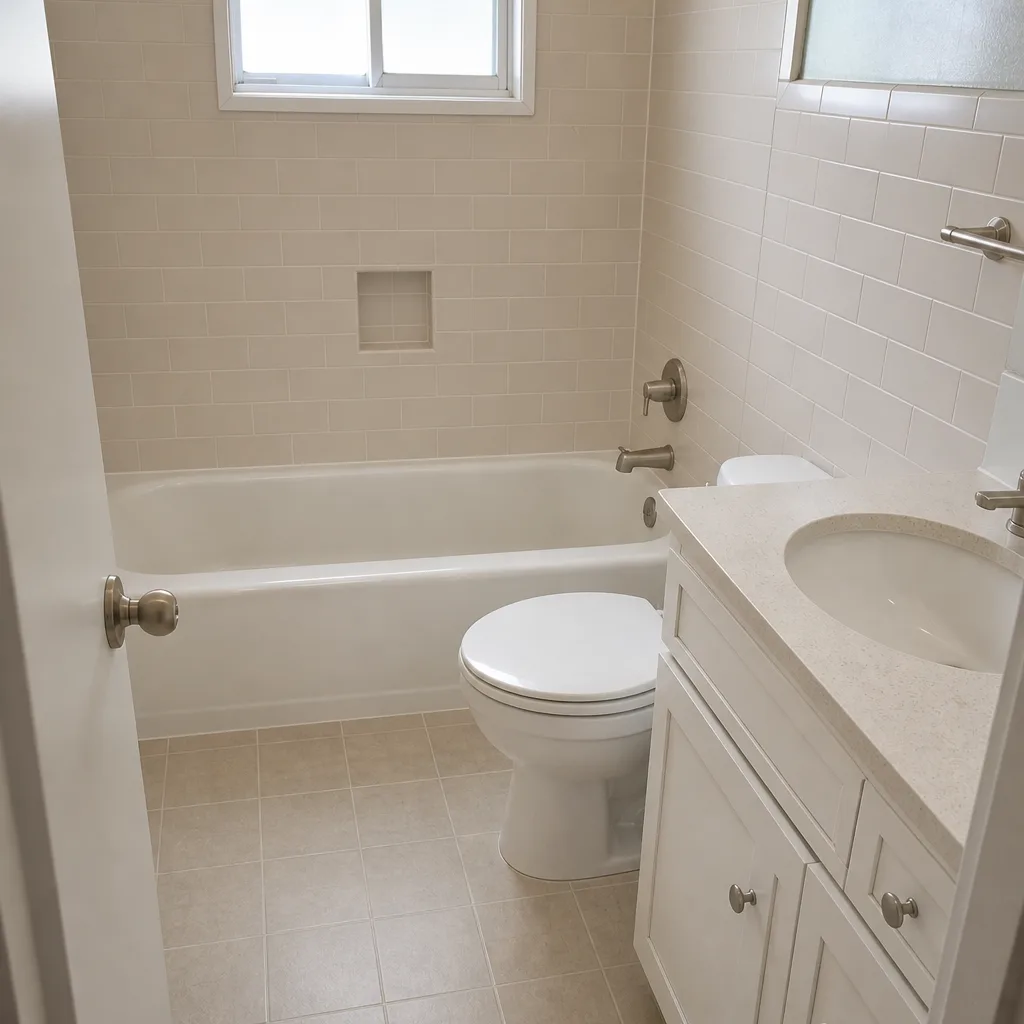
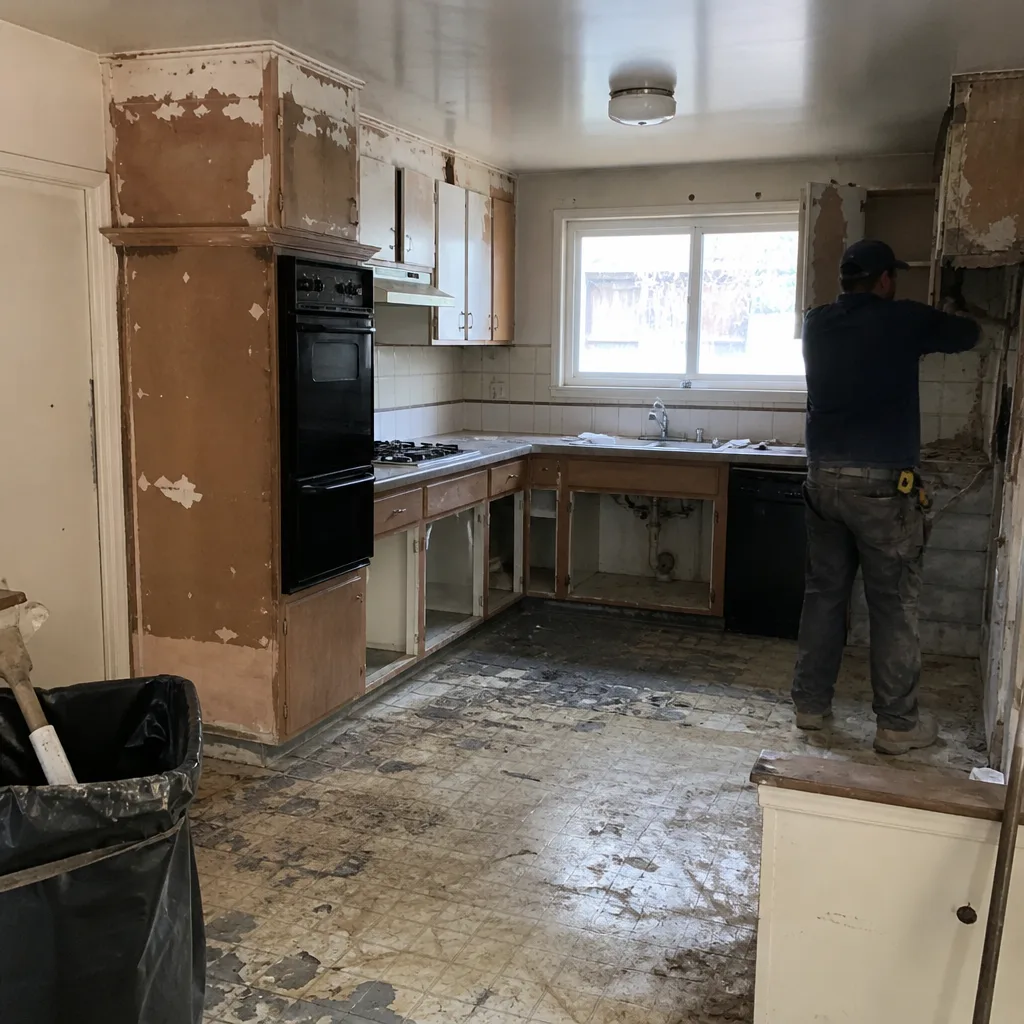
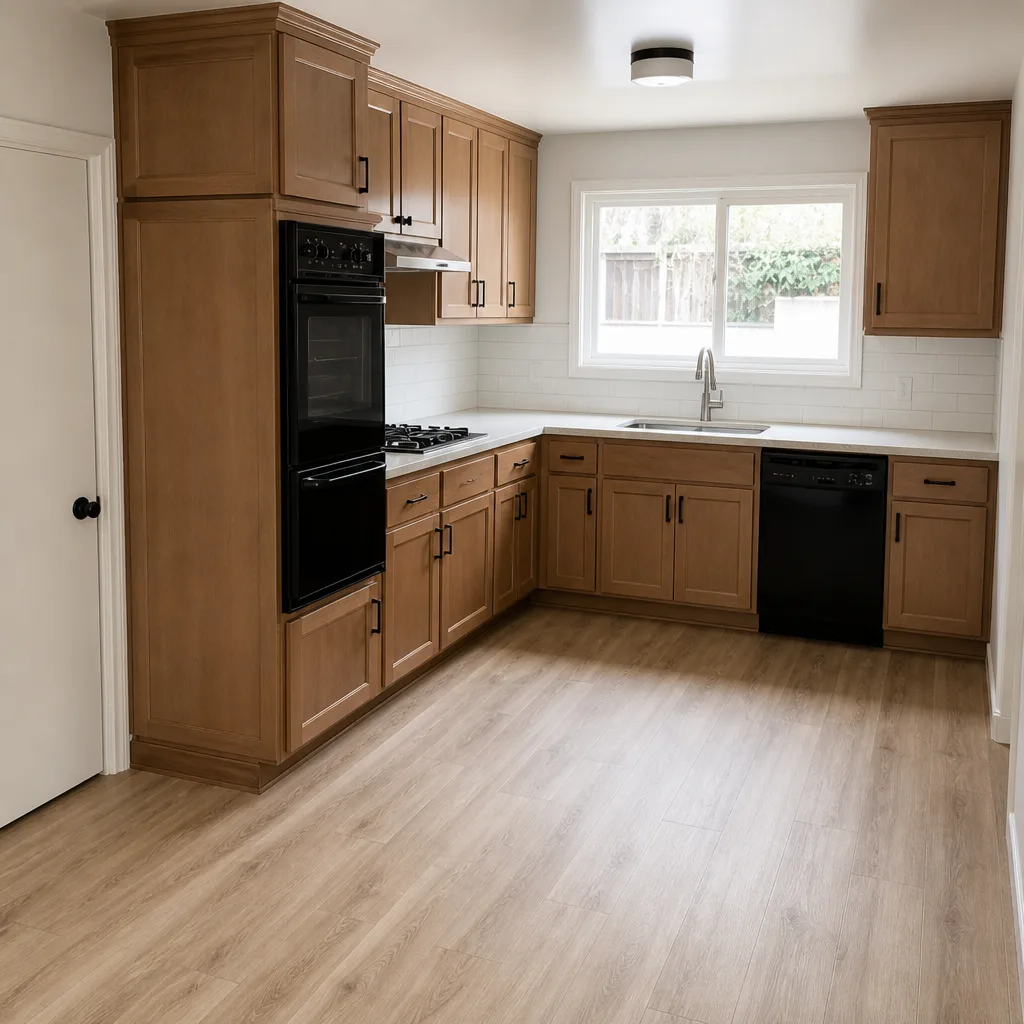
See the difference
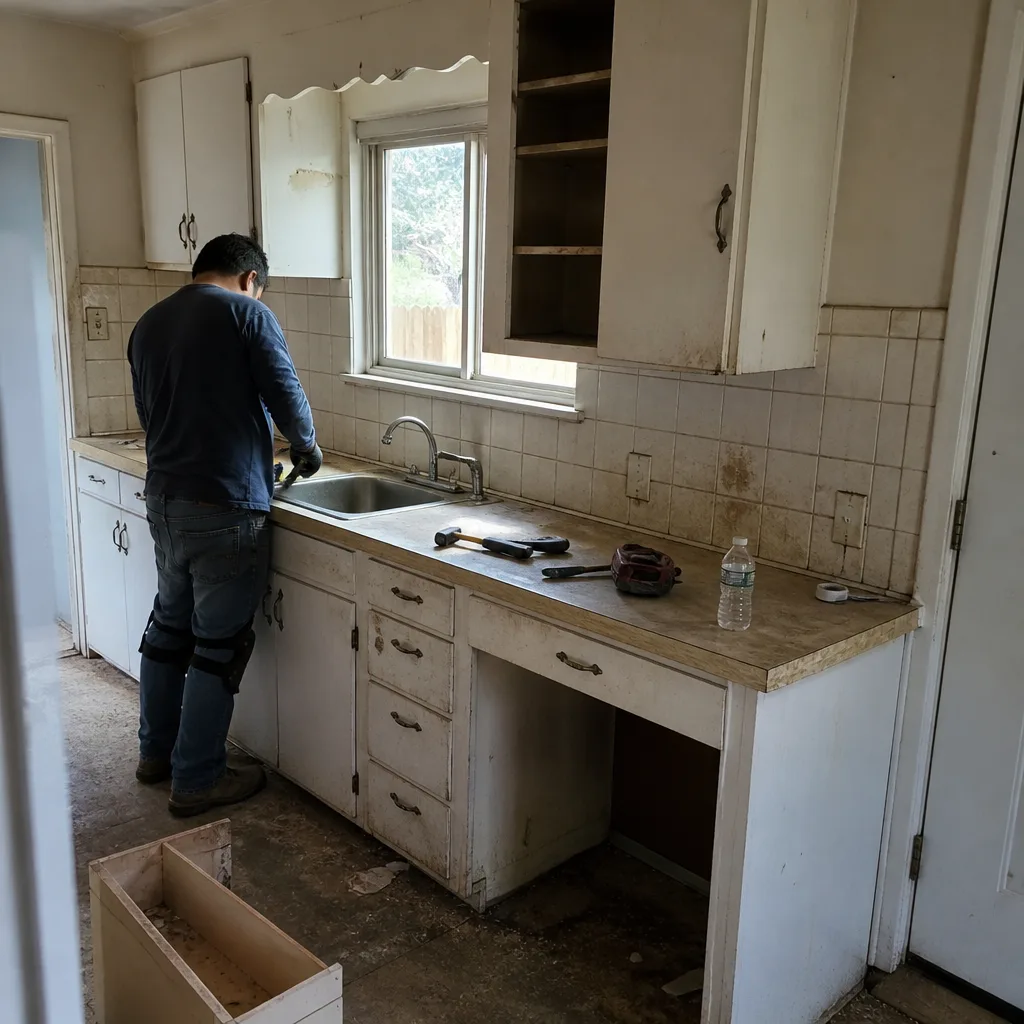 Before
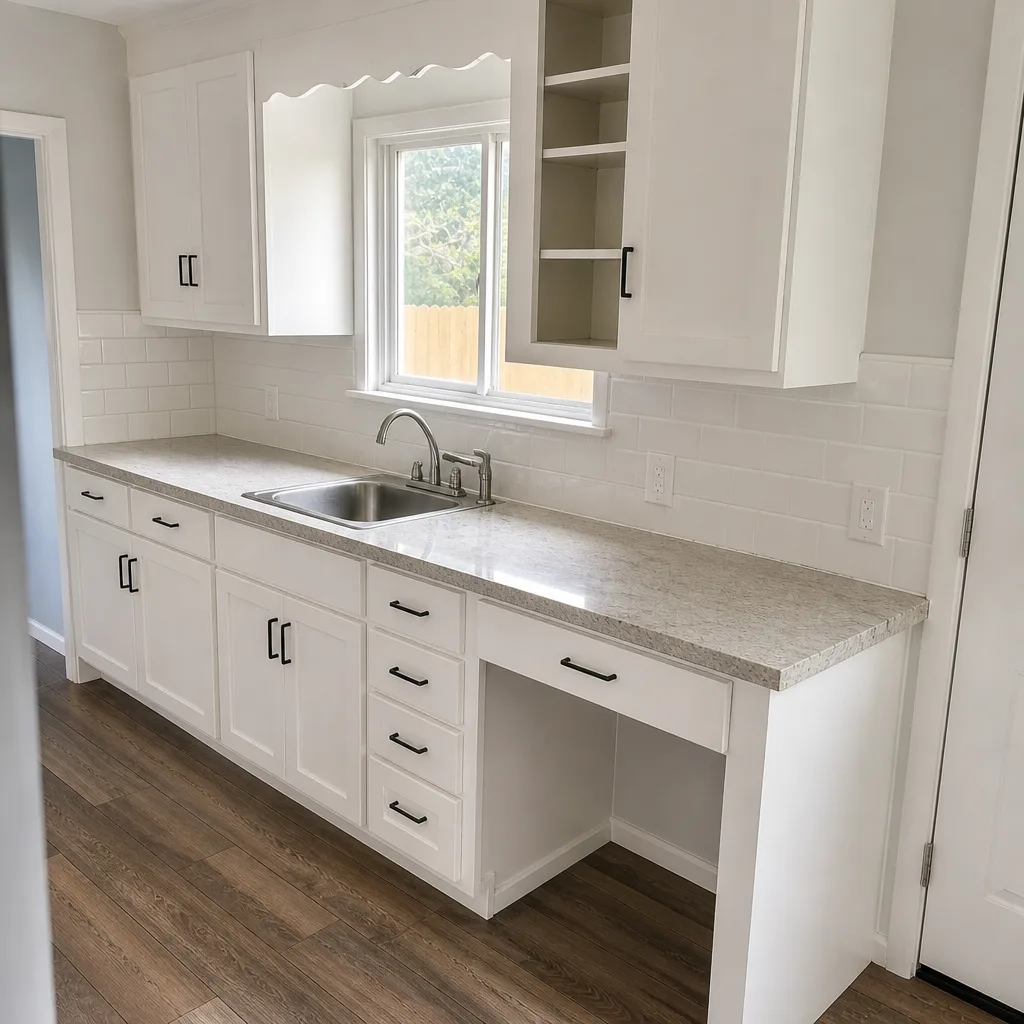 After
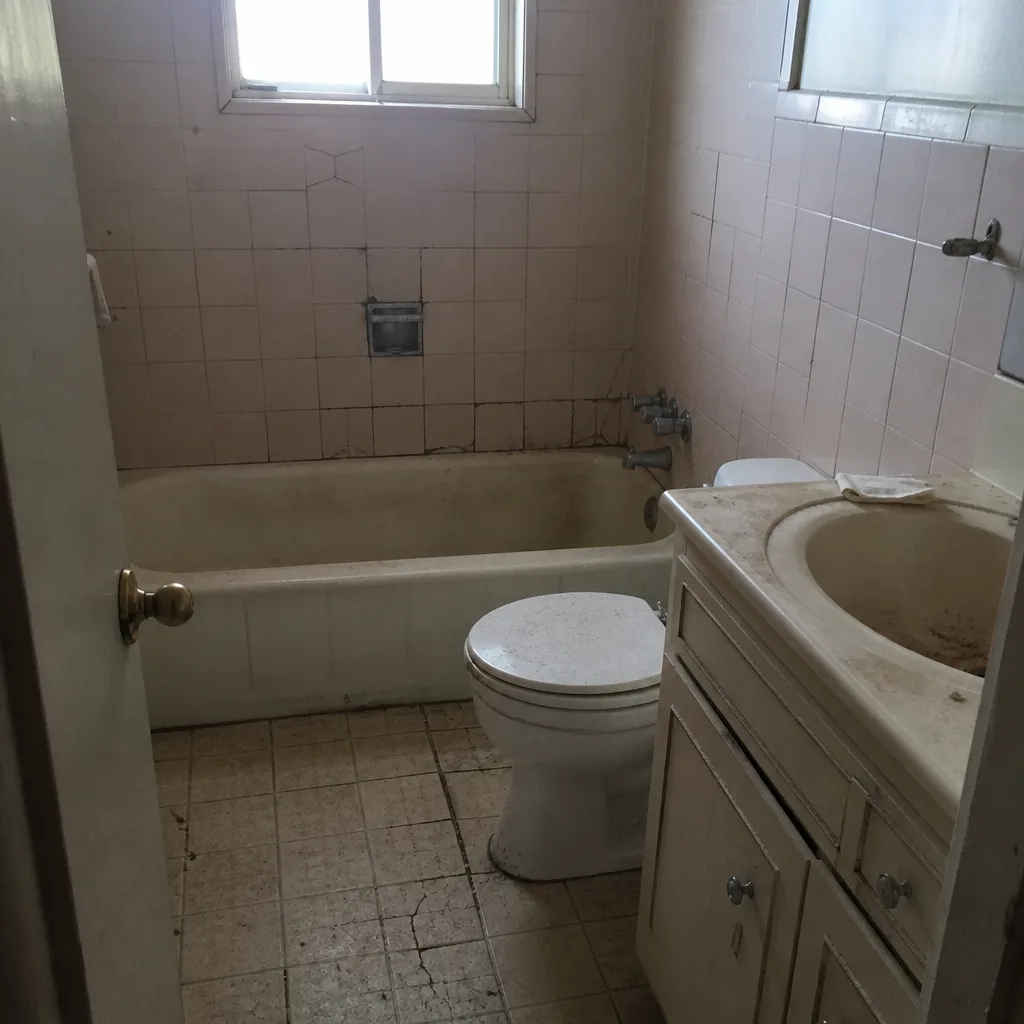 Before
 After
 Before
 After
When to Call a Professional

If you’re reading this and any of the following is true, it’s time to bring in a licensed eye: the contract you’re being asked to sign has no line-item scope, the payment schedule front-loads more than a third of the total, the contractor is discouraging permits on work that obviously requires them, or the job is on site and has gone silent for two weeks. Those are the four signs that most often precede a homeowner calling us after a bad experience. Before you sign anything, before you make the next payment, get a second opinion in writing. For homeowners starting a kitchen in Vallejo, our team is available to walk through the plan and put a written price on it. Bradford Remodeling Co Vallejo offers free estimates in Vallejo. Call (844) 560-4789.
Frequently Asked Questions
A lump-sum bid with no scope breakdown is the biggest warning sign. If the contractor won’t itemize what’s included, in writing, before work starts, everything downstream is negotiable at your expense. Call (844) 560-4789 for a written, line-item estimate.
No. A guarantee must be in writing, in the contract, with a defined time period and defined coverage. “Satisfaction guaranteed” is not a guarantee. If the contractor won’t say what’s covered and for how long, don’t sign.
Yes, and a serious one. In Vallejo and across Solano County, most kitchen work that touches electrical, plumbing, gas lines, or structural walls requires permits. A contractor suggesting “just a cosmetic remodel” to avoid inspections is signaling either a licensing problem or a willingness to skip inspections. Call (844) 560-4789 if you want a second read on a permit question.
A mid-size kitchen remodel typically runs four to eight weeks depending on cabinet lead times, permit inspection scheduling through the city, and how much structural and utility work is involved. Cabinet and countertop lead times alone often drive three of those weeks. Any timeline quoted much shorter without explanation is worth questioning.
Send a written notice of non-performance by certified mail and email, state the missed obligation and the date, set a cure date (usually 10 business days), and document every attempt to reach them. If they don’t respond, file a complaint with the Contractors State License Board. Don’t wait past two to three weeks of silence before escalating in writing.
Yes. California small claims court handles home improvement disputes up to statutory limits and doesn’t require a lawyer. The case usually turns on documentation: the signed contract, the written scope, the payment receipts, the dated photos, and estimates for corrective work from other licensed contractors. Build the file from day one.
The Bottom Line
The warning signs of a kitchen remodel heading off the rails show up in the paperwork, not on the job site. A written, line-item scope. A payment schedule tied to milestones, not front-loaded. Permits pulled and inspections passed as part of the standard scope. A written guarantee with a defined time period, in the contract, before the first tool comes out. If any of those are missing, the rest of the job is a gamble. Our bathroom remodeling service in Vallejo runs on the same standard, so if your project involves more than one room, ask us about it. At close, “squared away” means a clean site, a documented scope, a signed written guarantee in your hand. If you’re ready for a written price on your Vallejo kitchen, call (844) 560-4789. A real person answers, day or night. Estimates are free.
Written by the team at Bradford Remodeling Co Vallejo.